





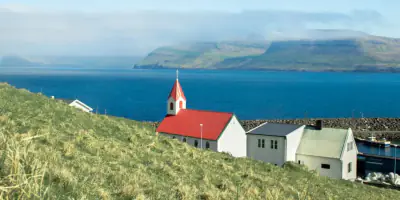



eSIM for Iceland 
Viasimo's Iceland eSIM starts at $1.59 for 1 GB over 7 days, running on Nova and Síminn with 5G where available. Plans last 1 to 180 days, arrive by email in minutes and install from your phone's settings, with no app.
Works everywhere in Iceland
- Capital Region
- East
- Northeast
- Northwest
- Reykjavik
- South
- Southern Peninsula
Select your planIn stock
Duration
Quantity
1
Unlimited data · 3 Days$6.99


Unlimited data · 3 Days ×1
$6.99
Does my phone take an eSIM? Check now
Dial *#06# on your phone. If you see an EID number, your phone takes an eSIM. Most phones sold since 2019 do.
Not sure it works on your phone? Check compatibilityWhich networks does the Iceland eSIM use?
Host networks: Nova / Síminn
Your eSIM picks one automatically; you do not choose or switch between them.
- Data
- 1 GB – 50 GB or unlimited
- Validity
- 1–180 days
- Speed
- 4G LTE / 5G
- Hotspot / tethering
- Supported on most devices
- Activation
- Starts when you first connect in your destination
- Speed management
- Roughly 2-3 GB per day at full speed, sometimes less depending on the local carrier, then reduced
- Top-ups
- Add more data from your account, before the plan expires
- Text messages (SMS)
- Data only: use an app for verification codes
- Unused validity
- 180 days before it must be installed
How much data do you need?
The allowances below are our sizing recommendations, not measurements. The plan beside each one is the cheapest option on this page that covers it.
| You are | Plan for | Cheapest plan that covers it |
|---|---|---|
| LightMaps, messaging and the occasional lookup | About 1 GB a week | $1.591 GB, 7 days |
| TypicalMaps, social, photos and some browsing | About 3 to 7 GB a week | $4.595 GB, 30 days |
| HeavyVideo streaming, video calls and uploads | 10 GB a week or more | $8.0010 GB, 30 days |
| Working or sharingTethering a laptop, calls and cloud sync | 20 GB a week or more | $13.99Unlimited, 7 days |
eSIM, local SIM or roaming?
Charged per day
Your carrier roaming
Queue and plastic
A SIM at the airport
$1.59
Viasimo, one bundle
Only the Viasimo figure is a price: it comes from today’s live catalog. The other two rows are directional, not quoted rates.
Important to know
- This is a data-only eSIM. It carries no calls or SMS on its own number.
- Your existing number stays on your primary SIM, so calls and verification texts keep working.
- Your phone must support eSIM, and some carrier-locked phones cannot install one.
- Signal varies with location, terrain, congestion and your handset. Dense urban areas are consistently better served than remote ones.
- 5G only works where the host network has deployed it and your phone supports it. Everywhere else it falls back to 4G LTE.
- The eSIM selects a host network automatically. You cannot pick or switch between them.
- Unlimited plans run at full speed up to a fair-use limit, then continue at a reduced speed. Read the fair usage policy
Frequently asked questions
Does an eSIM work in Iceland?
Yes. Your Iceland eSIM connects automatically the moment you arrive, with no roaming fees and nothing to set up at the airport. The host networks it can use are Nova, Síminn. Coverage runs on 4G LTE and 5G where the network has rolled it out, and falls back to 4G elsewhere.
Do I get 5G in Iceland?
Yes, where it has been deployed. 5G runs on Nova, Síminn in Iceland, and your eSIM uses it automatically on a 5G-capable phone, dropping back to 4G LTE outside covered areas. No country is covered everywhere, so 5G availability varies by location.
Does Iceland still have 3G coverage?
Mostly not. Iceland's operators planned to switch off 2G and 3G by the end of 2025, so in 2026 phones connect over 4G and 5G. Places that once had only 3G may now have no signal. Your eSIM connects through Nova and Síminn, both of which run 4G and 5G networks.
Will normal calls on my home SIM work in Iceland?
They should, provided your home network supports VoLTE (voice over 4G) roaming in Iceland. Since 2G and 3G have been retired, older roaming calls may not work, even when data does. Ask your provider before you travel. If calls fail, use WhatsApp or FaceTime over your eSIM data instead. The eSIM itself is data only.
Is it safe to visit Iceland during the Reykjanes eruptions?
For most trips, yes. According to the UK Foreign Office, eruptions near Grindavík since December 2023 have not affected Reykjavík, Keflavík Airport or the rest of the country. More eruptions are likely. Before visiting the peninsula, check en.vedur.is and safetravel.is for gas pollution and closures, and never walk on new lava.
How do I share my location with rescue services in Iceland?
Use the Safetravel app from Safe Travel Iceland, which can send your GPS location to emergency services. Before hiking or driving into the highlands, leave a travel plan with your hotel or Safe Travel Iceland. Large parts of the interior have no mobile coverage, so that plan may be the only way rescuers know where to look.
Which network does a travel eSIM use in Iceland?
This eSIM connects to Nova or Síminn, picking whichever signal is stronger. Nova launched Iceland's first 5G network in 2020, and Síminn followed in 2021. Iceland's third operator, Sýn (Vodafone), isn't one of the networks the eSIM uses.
How much data do I need for 7 days in Iceland?
For 7 days in Iceland, Viasimo sells 1 GB for $1.59 and unlimited data for $13.99. Our sizing recommendation, not a measurement: maps, messaging and the occasional lookup, about 1 GB a week; maps, social, photos and some browsing, about 3 to 7 GB a week. The data calculator on this site works it out from how you actually use your phone.
Installing, keeping your number, topping up and hotspot work the same everywhere: see how it works →
Iceland: what to know before you land
Iceland's mobile operators planned to switch off 2G and 3G by the end of 2025, so in 2026 you'll be on 4G or 5G wherever there's a signal. This eSIM uses Nova and Síminn. Before you set off, check the Reykjanes eruption updates and register your route with Safetravel.
- Emergency
- 112
- Plugs
- CF 230V
- Currency
- Icelandic króna (ISK)
Main airports
- KEF Keflavík International Airport
- RKV Reykjavík Airport (domestic)
- AEY Akureyri Airport
Apps worth having SafetravelVeður (Icelandic Met Office)Google MapsWhatsApp
Nova, Síminn and Iceland's 2G and 3G switch-off
Iceland has three mobile operators: Síminn, Nova and Sýn, which runs the Vodafone brand. Nova was the first to launch 5G, in 2020, and Síminn and Vodafone followed in 2021. This eSIM connects to Nova or Síminn, depending on which has the stronger signal. It doesn't use Sýn/Vodafone.
The bigger change is underneath. Iceland's operators planned to retire 2G and 3G by the end of 2025, so the old 3G network some guidebooks mention as a fallback on remote stretches of the Ring Road is being switched off. Today, wherever your phone shows bars, you're on 4G or 5G, and where there's no 4G, you'll have no signal at all.
This affects your home SIM more than your eSIM. Without 2G and 3G, voice calls on a roaming phone depend on VoLTE (calls over 4G). If your home provider doesn't support VoLTE roaming in Iceland, you may be able to use data but not make or receive normal calls. Check with your provider before you go, and set up WhatsApp or FaceTime calling over the eSIM's data as a backup.
Reykjanes eruptions, Grindavík and gas pollution
Since December 2023, a series of eruptions on the Reykjanes peninsula has affected Grindavík and the area around it. According to the UK Foreign Office, Reykjavík, Keflavík Airport and the rest of Iceland have not been affected. More eruptions are likely.
Check these before you drive out to Reykjanes:
- Icelandic Met Office (en.vedur.is): eruption updates, gas pollution forecasts and weather warnings.
- Safe Travel Iceland (safetravel.is): road closures and travel alerts.
- road.is: live road conditions and closures.
The FCDO warns that gas from an eruption can reach dangerous levels quickly and travel further than you might expect, depending on the wind. Never walk on new lava, however solid it looks, because the crust can break without warning.
If you want to see an eruption site, check the official updates on your phone before you leave Reykjavík and again before you get out of the car. Conditions and access can change within hours.
Leaving a travel plan and sharing your location with Safetravel
Iceland's emergency number is 112. Safe Travel Iceland's Safetravel app lets hikers send their GPS location directly to emergency services, which is much faster than trying to describe where you are on an unmarked gravel track. The app also shows weather and road updates.
Safe Travel's main advice for anyone heading into the highlands, onto a glacier or on a long hike is to leave a detailed travel plan with your hotel or with Safe Travel. This means that if you're out of signal when something goes wrong, someone will know where to start looking.
The UK Foreign Office adds that strong winds are common, river levels can rise quickly, and some interior roads need a 4x4 and are only open for a short time in summer. Off-road driving is strictly controlled, and fines can be steep. Wind-blown sand and ash can also damage hire cars, and many insurance policies don't cover it. Before each day's drive, check en.vedur.is and road.is on your phone. The forecast often changes, so it's worth looking again before you set off.
Researched October 2026 · 4 sources
- en.wikipedia.org Telecommunications in Iceland (Wikipedia)
- gov.uk Iceland travel advice: safety and security (GOV.UK)
- safetravel.is Safe Travel Iceland
- worldstandards.eu Plug, socket and voltage by country (World Standards)
Seven days in Iceland: Reykjavík, the Golden Circle, the south coast and Snæfellsnes
A self-drive week for first-time visitors: Reykjavík, the Golden Circle, the waterfalls and black beaches of the south coast as far as the Jökulsárlón glacier lagoon, then the Snæfellsnes peninsula, finishing with a lagoon before your flight.
When to go June to August gives near-endless daylight and open roads; September to March brings northern lights but short days, storms and icy roads, so check road.is and the Met Office forecast every morning.
-
Day 1 Reykjavík
Reykjavík: Hallgrímskirkja and the harbour
Keflavík Airport is about 50 km from Reykjavík, roughly 45 minutes by Flybus or hire car.
Start at Hallgrímskirkja and take the lift up the tower for the view over the coloured roofs. Walk down Skólavörðustígur to the old centre around Austurvöllur and the pond, Tjörnin. Follow the shoreline path past the Sun Voyager sculpture to the Harpa concert hall, then end at the old harbour, where whale-watching boats and the Saga Museum area sit beside the fishing quays.
Signal Nova and Síminn give strong 4G and 5G across Reykjavík. Since 2G and 3G have been switched off, your home SIM needs VoLTE roaming for normal calls.
-
Day 2 Hella
The Golden Circle: Þingvellir, Geysir and Gullfoss
Reykjavík to Þingvellir is about 45 minutes; the full loop and drive to Hella is about 230 km, so allow a full day.
Drive to Þingvellir National Park, a UNESCO site where Iceland's parliament met from 930 and the North American and Eurasian plates pull apart. Walk the Almannagjá rift to the Lögberg and Öxarárfoss waterfall. Continue to the Haukadalur geothermal area, where Strokkur erupts every few minutes, and on to Gullfoss, a two-step waterfall on the Hvítá. Finish at the Secret Lagoon in Flúðir before driving south to Hella.
Signal 4G is good on the Golden Circle roads and at all three main stops. The rift paths at Þingvellir can weaken it briefly.
-
Day 3 Vík
South coast waterfalls and Reynisfjara
Hella to Vík is about 100 km, under 1 hour 30 minutes of driving without stops.
Drive east along Route 1 to Seljalandsfoss, where a path runs behind the falling water, and the smaller Gljúfrabúi in a cleft nearby. Stop at Skógafoss and climb the stairs beside it. Walk to the snout of the Sólheimajökull glacier, then visit the Dyrhólaey arch and Reynisfjara's black sand and basalt columns. Stay well back from the water at Reynisfjara: sneaker waves have killed visitors.
Signal 4G holds along Route 1 and at the waterfalls. Coverage is weaker in the gorge at Gljúfrabúi and on the Sólheimajökull path.
-
Day 4 Skaftafell area
Skaftafell and the Jökulsárlón glacier lagoon
Vík to Skaftafell is about 140 km, roughly 2 hours; Skaftafell to Jökulsárlón is about 55 km, another 45 minutes.
Cross the Eldhraun lava field and the black sands of Skeiðarársandur to Skaftafell in Vatnajökull National Park. Hike up to Svartifoss, a waterfall framed by dark basalt columns, about 1 hour 30 minutes there and back. Continue east to Jökulsárlón, where icebergs calve from Breiðamerkurjökull, and cross the road to Diamond Beach, where ice washes up on black sand. Stay overnight in the Skaftafell area.
Signal 4G is generally available on Route 1 and at Skaftafell and Jökulsárlón, though there are short dead spots on the long empty stretches across the sands. Do not step onto the glacier without a certified guide.
-
Day 5 Reykjavík
Fjaðrárgljúfur and back to Reykjavík
Skaftafell to Reykjavík is about 330 km, roughly 4 hours 30 minutes of driving. Check road.is and the wind forecast before leaving.
Drive west along the south coast. Stop at Fjaðrárgljúfur, a winding mossy canyon near Kirkjubæjarklaustur, and walk the path along its rim; it may be closed in spring thaw to protect the ground. Continue past Vík and Hvolsvöllur, pausing at the LAVA Centre for its exhibition on Iceland's volcanoes, then cross the Hellisheiði plateau back to Reykjavík for the evening.
Signal Mostly 4G along Route 1. Hellisheiði has good coverage, but weather here can change fast, so check road status before setting off.
-
Day 6 Reykjavík
The Snæfellsnes peninsula
Reykjavík to Arnarstapi is about 190 km, roughly 2 hours 30 minutes; the full loop and return is a long day of around 450 km.
Drive north through the Hvalfjörður tunnel to Snæfellsnes. See the black church at Búðir, walk the clifftop path between Arnarstapi and Hellnar, and visit Djúpalónssandur's pebble beach with the rusted wreck of a trawler. Continue round the tip of Snæfellsjökull National Park to Kirkjufell and its waterfall near Grundarfjörður before driving back to Reykjavík.
Signal 4G in the towns of Grundarfjörður and Ólafsvík and on most of the coast road. Around the western tip of the peninsula, coverage has gaps, especially on the trails.
-
Day 7 Reykjavík
Reykjanes or a lagoon before your flight
Reykjavík to the Reykjanes sights is about 1 hour by car; Keflavík Airport is close to the Blue Lagoon.
Check the Icelandic Met Office eruption and gas updates, then choose. If Reykjanes is open, drive to the Bridge Between Continents over a fissure, the Gunnuhver hot springs and the Reykjanesviti lighthouse, finishing at the Blue Lagoon near the airport. If roads are closed, visit the Sky Lagoon in Kópavogur, then the Perlan museum for its ice cave and volcano exhibition, before driving to Keflavík.
Signal 4G and 5G around Reykjavík and the airport. Near eruption sites, follow the official closures rather than your map app, which may not show them.
Staying connected on this route
- Your eSIM uses Nova and Síminn, not Vodafone (Sýn); with 3G gone, no bars means no service at all, so carry offline maps.
- Install the Safetravel app and leave a travel plan before glacier walks or long hikes.
- Check road.is, safetravel.is and en.vedur.is each morning, especially for wind on the south coast and eruption news on Reykjanes.
- Ask your home provider whether VoLTE roaming works in Iceland, or normal calls on your home SIM may not connect now that 3G is gone.
Itinerary sources · 6
- visiticeland.com Visit Iceland, official tourism site
- safetravel.is Safe Travel Iceland
- gov.uk GOV.UK: Iceland safety and security
- whc.unesco.org UNESCO World Heritage: Þingvellir National Park
- whc.unesco.org UNESCO World Heritage: Vatnajökull National Park
- umferdin.is Vegagerðin (Icelandic Road Administration): road conditions
Information and verification
Each block below says what was checked and when. Anything we cannot date, we do not claim.
- Prices and plans
- Every price and allowance on this page is read from the live catalog, not typed in.
- Host networks
- The operator list comes from the network partner that carries this eSIM.
Transparent pricing
Iceland eSIM prices
| Data | Price | Per day |
|---|---|---|
| Unlimited | $6.99 | $2.33/day |
| Data | Price | Per day |
|---|---|---|
| Unlimited | $10.99 | $2.20/day |
| Data | Price | Per day |
|---|---|---|
| Unlimited | $18.99 | $1.90/day |
| Data | Price | Per day |
|---|---|---|
| Unlimited | $97.99 | $1.63/day |
| Data | Price | Per day |
|---|---|---|
| Unlimited | $149.99 | $1.67/day |
Going to more than one country?
Regional plans that also cover Iceland
Destinations
Popular eSIM destinations
Travel guides
Read before you go


Jul 13, 2026 | 8 minute read