eSIM for Faroe Islands 
Viasimo's Faroe Islands eSIM starts at $1.59 for 500 MB over 1 day, running on Faroese Telecom with 5G where available. Plans last 1 to 180 days, arrive by email in minutes and install from your phone's settings, with no app.
Works everywhere in Faroe Islands
- Eysturoy
- Norðoyar
- Sandoy
- Streymoy
- Suðuroy
- Vágar
Duration


Unlimited data · 3 Days ×1
$11.99
Does my phone take an eSIM? Check now
Dial *#06# on your phone. If you see an EID number, your phone takes an eSIM. Most phones sold since 2019 do.
Not sure it works on your phone? Check compatibilityWhich networks does the Faroe Islands eSIM use?
Host networks: Faroese Telecom
Your eSIM picks one automatically; you do not choose or switch between them.
- Data
- 500 MB – 20 GB or unlimited
- Validity
- 1–180 days
- Speed
- 4G LTE / 5G
- Hotspot / tethering
- Supported on most devices
- Activation
- Starts when you first connect in your destination
- Speed management
- Roughly 2-3 GB per day at full speed, sometimes less depending on the local carrier, then reduced
- Top-ups
- Add more data from your account, before the plan expires
- Text messages (SMS)
- Data only: use an app for verification codes
- Connects via
- Israel
- Unused validity
- 180 days before it must be installed
How much data do you need?
The allowances below are our sizing recommendations, not measurements. The plan beside each one is the cheapest option on this page that covers it.
| You are | Plan for | Cheapest plan that covers it |
|---|---|---|
| LightMaps, messaging and the occasional lookup | About 1 GB a week | $2.291 GB, 7 days |
| TypicalMaps, social, photos and some browsing | About 3 to 7 GB a week | $8.005 GB, 30 days |
| HeavyVideo streaming, video calls and uploads | 10 GB a week or more | $13.9910 GB, 30 days |
| Working or sharingTethering a laptop, calls and cloud sync | 20 GB a week or more | $22.99Unlimited, 7 days |
eSIM, local SIM or roaming?
Charged per day
Your carrier roaming
Queue and plastic
A SIM at the airport
$1.59
Viasimo, one bundle
Only the Viasimo figure is a price: it comes from today’s live catalog. The other two rows are directional, not quoted rates.
Important to know
- This is a data-only eSIM. It carries no calls or SMS on its own number.
- Your existing number stays on your primary SIM, so calls and verification texts keep working.
- Your phone must support eSIM, and some carrier-locked phones cannot install one.
- Signal varies with location, terrain, congestion and your handset. Dense urban areas are consistently better served than remote ones.
- 5G only works where the host network has deployed it and your phone supports it. Everywhere else it falls back to 4G LTE.
- The eSIM selects a host network automatically. You cannot pick or switch between them.
- Unlimited plans run at full speed up to a fair-use limit, then continue at a reduced speed. Read the fair usage policy
Frequently asked questions
Does an eSIM work in Faroe Islands?
Yes. Your Faroe Islands eSIM connects automatically the moment you arrive, with no roaming fees and nothing to set up at the airport. The host networks it can use are Faroese Telecom. Coverage runs on 4G LTE and 5G where the network has rolled it out, and falls back to 4G elsewhere.
Do I get 5G in Faroe Islands?
Yes, where it has been deployed. 5G runs on Faroese Telecom in Faroe Islands, and your eSIM uses it automatically on a 5G-capable phone, dropping back to 4G LTE outside covered areas. No country is covered everywhere, so 5G availability varies by location.
How do I pay the tunnel tolls in a Faroe Islands rental car?
Through the rental company. Cameras record your plate in the four toll tunnels, Vágatunnilin, Norðoyatunnilin, Eysturoyartunnilin and Sandoyartunnilin, and the rental firm bills you, sometimes at its own rates. With your own car, pay online at tunnil.fo within six days, or a DKK 50 fee is added and an invoice sent.
Does EU roaming work in the Faroe Islands?
Not automatically. The Faroe Islands are part of the Kingdom of Denmark but outside the EU, so the EU's roam-like-at-home rules do not apply there. Some operators include the Faroes in their bundles voluntarily, but many charge separate roaming rates. Check your home operator's list, or use a local data plan.
How do I get from Vágar Airport to Tórshavn?
By road through the Vágatunnilin subsea tunnel. Tórshavn is about 47 km away, and the bus takes around an hour. If you drive, the tunnel toll is recorded by number plate. Set up navigation and download offline maps in the terminal, as there is no point stopping in the tunnel to fix a route.
Can I go hiking in the Faroe Islands in November or December?
With care. Visit Faroe Islands advises avoiding hikes during hare-hunting season, from 2 November to 31 December, and contacting the landowner through a regional information centre if you must go. Some routes also charge fees or need a guide all year, so check online and leave a Safe Travel hiking plan with your host.
How much data do I need for 7 days in Faroe Islands?
For 7 days in Faroe Islands, Viasimo sells 1 GB for $2.29 and unlimited data for $22.99. Our sizing recommendation, not a measurement: maps, messaging and the occasional lookup, about 1 GB a week; maps, social, photos and some browsing, about 3 to 7 GB a week. The data calculator on this site works it out from how you actually use your phone.
Installing, keeping your number, topping up and hotspot work the same everywhere: see how it works →
Faroe Islands: what to know before you land
The Faroe Islands are part of the Kingdom of Denmark but outside the EU, so European roam-like-at-home allowances do not automatically apply. Your phone also does real work here: the four toll tunnels, including the 11 km Eysturoyartunnilin with its undersea roundabout, are paid online by number plate, and some hiking routes need paying for or booking ahead.
- Emergency
- 112
- Plugs
- CEFK 230V
- Currency
- Faroese króna (at par with the Danish krone, DKK)
Main airports
- FAE Vágar Airport
Paying tolls for Vágatunnilin, Eysturoyartunnilin and Sandoyartunnilin
Four of the Faroes' subsea tunnels charge tolls: Vágatunnilin (from the airport island of Vágar), Norðoyatunnilin (to Klaksvík), Eysturoyartunnilin and Sandoyartunnilin. There are no barriers. Cameras read your number plate as you drive through, and the tunnels are open 24 hours a day.
How you pay depends on the car:
- Rental cars: you pay the rental company, not the tunnel operator, and rental firms may set their own prices. Ask at the desk how they bill you.
- Your own car (for example, arriving on the ferry from Denmark or Iceland): pay online at tunnil.fo before or after your trip. Payment is due within six days. After that a DKK 50 fee is added and an invoice is sent.
- Short-stay automatic payment: register your plate and a card online, and trips are deducted as you go.
Eysturoyartunnilin, opened in December 2020, is 11.24 km long and has the world's first subsea roundabout, 72.6 m under the fjord, with its deepest point 189 m down. It is worth setting navigation before you enter, then paying the toll from the car park on the far side if you are driving your own vehicle.
Vágar Airport (FAE), the bus to Tórshavn and Atlantic Airways helicopters
Vágar Airport (FAE) is the only airport, about 47 km by road from Tórshavn, and the bus takes around an hour. Atlantic Airways is based there and flies year-round to Copenhagen, Billund, Oslo and Reykjavík–Keflavík, with seasonal routes such as Edinburgh, London Gatwick, Paris, Barcelona and Palma. Icelandair flies to Keflavík, Widerøe to Bergen, and SAS to Copenhagen in season.
A short flight with a lot of weather risk means live updates matter:
- Fog and wind cause delays and diversions. Turn on notifications in your airline's app and keep data on during your last day.
- If your plans include Atlantic Airways helicopters, which serve outlying places such as Mykines, Koltur, Svínoy, Skúvoy and Dímun as well as Tórshavn and Klaksvík, rely on online updates rather than turning up to check. These flights are weather-dependent and small.
- On a tight connection in Copenhagen or Reykjavík, rebooking happens in the airline's app. Data is more reliable than airport wifi when you need it.
The road from the airport heads into the Vágatunnilin, so set up your route before you leave the terminal.
Why EU roaming does not cover the Faroes
Denmark is in the EU, but the Faroe Islands are not. The European Commission's roam-like-at-home rules apply to the EU states plus Iceland, Liechtenstein, Norway, Moldova and Ukraine, and the Commission says other countries are outside the regime, although individual operators may include them in their deals. In practice that means a Danish, German or other European SIM may charge separate roaming rates on the Faroes, even if it works for free in Copenhagen the day before.
The local incumbent, Faroese Telecom (Føroya Tele), is wholly owned by the Faroese government, and it is the network your eSIM uses. It sells 5G services locally and offers a prepaid visitor plan, Hello Føroyar.
The islands' international connection runs over subsea fibre cables, including SHEFA-2 to Shetland, Orkney and Scotland and FARICE-1 to Iceland, so speeds to the rest of the world are comparable to the mainland.
Money follows the same split. The Faroese króna is issued at par with the Danish krone, and Danish krone are also used. Card payments are the norm, so keep your home SIM active for bank verification codes.
Hiking fees, the hare-hunting season and the Safe Travel plan
Much of the Faroese countryside is private farmland, and Visit Faroe Islands warns that some routes restrict access and charge a walking fee or require a booked local guide. Check your route's status online before you drive to the trailhead. Mobile data is useful here because fees and slots are typically booked online, and signal at remote car parks can be weak, so book in your accommodation the night before.
Other things to check on your phone before you set off:
- Hare-hunting season, 2 November to 31 December: the tourist board advises avoiding hiking then. If you must go, contact the landowner through a regional information centre.
- Farming activity: lambing and sheep gathering also close or restrict some routes. Regional information centres have current details.
- Weather: the tourist board's advice is to expect all four seasons in one day. Check the forecast immediately before you leave, not at breakfast.
Fill in the hiking plan on the Safe Travel leaflet and leave it with your host or in your car. Then download the route offline, because cloud and cliffs will cut your signal on most ridges. Your eSIM is data only, so emergency calls to 112 go through your home SIM.
Researched October 2026 · 6 sources
- tunnil.fo Tunnil – Faroese subsea tunnel tolls
- en.wikipedia.org Vágar Airport – Wikipedia
- en.wikipedia.org Eysturoy Tunnel – Wikipedia
- visitfaroeislands.com Hiking – Visit Faroe Islands
- en.wikipedia.org Føroya Tele – Wikipedia
- europa.eu Mobile roaming costs – Your Europe (European Commission)
Seven days in the Faroe Islands: Tórshavn, Vágar, Mykines, Eysturoy and Kalsoy
A self-drive week for walkers who can cope with changeable weather: Tórshavn as a base, waterfalls and sea cliffs on Vágar, the puffin island of Mykines by ferry, the villages of Streymoy and Eysturoy, and the Kallur lighthouse on Kalsoy.
When to go May to August for long daylight, the best hiking conditions and puffins on Mykines; ferries and trails can close at short notice in any season, and some landowners ask walkers to stay away during hare-hunting season, 2 November to 31 December.
-
Day 1 Tórshavn
Arrive on Vágar and drive to Tórshavn
Tórshavn is about 47 km and 45 minutes by car from Vágar Airport; the tunnel toll is recorded by number plate.
Pick up your hire car at Vágar Airport and drive the short road to Gásadalur to see Múlafossur, the waterfall that drops straight into the sea below the village. Return through the Vágatunnilin subsea tunnel to Streymoy and on to Tórshavn. In the evening, walk the turf-roofed red buildings of Tinganes, the old parliament headland, and the small harbour.
Signal Faroese Telecom 5G is strong in Tórshavn and around the airport, and 4G covers most roads. Expect weaker signal deep inside the subsea tunnel.
-
Day 2 Tórshavn
Sørvágsvatn and Trælanípa
About 40 minutes from Tórshavn to Miðvágur by car.
Drive back to Vágar and walk from Miðvágur along Sørvágsvatn to the cliffs at Trælanípa, where the lake appears to hang above the ocean. The route crosses private farmland and a fee applies, paid at the start. Allow three hours for the return walk. On the way back, stop at the village of Bøur for its view of the sea stacks Drangarnir and the islet of Tindhólmur.
Signal Generally good 4G on the walk, though wind and cliffs can make it fluctuate near Trælanípa.
-
Day 3 Tórshavn
Mykines and its puffins
The ferry from Sørvágur takes about 45 minutes; Atlantic Airways also runs subsidised helicopter flights on some days.
Take the morning ferry from Sørvágur to Mykines, the westernmost island and the best place to see puffins between May and August. Walk from the village across the cliffs and the footbridge to Mykineshólmur and its lighthouse; the hike requires a fee and advance booking. Watch the forecast closely, as boats are often cancelled in rough seas, and keep a plan B such as a day around Vágar.
Signal Patchy on the ferry and weak in places on Mykines, especially on the far side of the island. Save your ferry booking and return time offline.
-
Day 4 Tórshavn
Kirkjubøur, Saksun and Tjørnuvík
Kirkjubøur is about 20 minutes from Tórshavn; Saksun and Tjørnuvík are about an hour north.
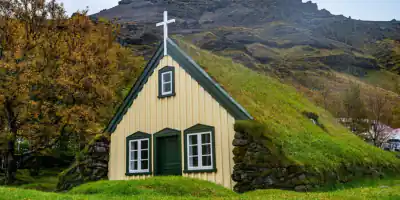
Drive south to Kirkjubøur, the medieval religious centre of the islands, to see the ruins of the Magnus Cathedral, St Olav's Church and a farmhouse still lived in by the same family for centuries. Then head north up Streymoy to Saksun, where a turf-roofed church overlooks a tidal lagoon, and finish at Tjørnuvík, a village beach facing the sea stacks known as the Giant and the Witch.
Signal Good 4G in Kirkjubøur. Saksun and Tjørnuvík sit in deep valleys where signal is weaker, so load maps before you leave the main road.
-
Day 5 Tórshavn
Eysturoy: Gjógv and Slættaratindur
Gjógv is about an hour from Tórshavn through the Eysturoyartunnilin.
Drive through the Eysturoyartunnilin, with its lit undersea roundabout, to Eysturoy. In clear weather, climb Slættaratindur, at 880 m the highest peak in the islands, from the Eiðisskarð pass road. Afterwards, drive on to Gjógv, a village with a natural sea gorge used as a harbour, and walk the clifftop path above it. Return via Eiði for the view of the sea stacks from the other side.
Signal Strong coverage on the main roads; patchy on the summit of Slættaratindur and in the gorge at Gjógv.
-
Day 6 Klaksvík
Klaksvík and the Kallur lighthouse on Kalsoy
Klaksvík is about an hour from Tórshavn; the ferry to Kalsoy takes about 20 minutes and is busy in summer.
Drive through the subsea Norðoyatunnilin to Klaksvík, the islands' second town. Take the car ferry to Kalsoy and drive the narrow road through single-lane tunnels to Trøllanes. Walk up to the Kallur lighthouse for a view along the cliffs; check locally whether a fee applies and keep well back from the edge in wind. Spend the evening in Klaksvík.
Signal Good in Klaksvík. Coverage on Kalsoy is patchy, particularly in the narrow tunnels and on the exposed headland at Kallur.
-
Day 7 Vágar
Back to Vágar for your flight
About 1.5 hours from Klaksvík to Vágar Airport by car.
Head back south from Klaksvík. If time allows, take the short ferry from Tórshavn to Nólsoy or stop at Velbastaður for the view across to Hestur and Koltur. Otherwise, drive straight back to Vágar Airport, allowing time for hire-car return and any last-minute weather delays. Pack waterproofs in your hand luggage.
Signal Good 4G and 5G around Tórshavn and the airport. Check your flight status in the Atlantic Airways app before setting out, as fog causes delays.
Staying connected on this route
- EU roam-like-at-home rules do not apply in the Faroe Islands, so turn off roaming on your home SIM.
- Download an offline map of all the islands before you arrive; side valleys, cliffs and ferries have weaker signal.
- Check hiking fees and bookings on Visit Faroe Islands before you go, and leave a Safe Travel hiking plan with your host.
Itinerary sources · 3
- visitfaroeislands.com Visit Faroe Islands: hiking
- ssl.fo Strandfaraskip Landsins (public ferries and buses)
- atlanticairways.com Atlantic Airways: helicopter services
Information and verification
Each block below says what was checked and when. Anything we cannot date, we do not claim.
- Prices and plans
- Every price and allowance on this page is read from the live catalog, not typed in.
- Host networks
- The operator list comes from the network partner that carries this eSIM.
Faroe Islands eSIM prices
| Data | Price | Per day |
|---|---|---|
| Unlimited | $11.99 | $4.00/day |
| Data | Price | Per day |
|---|---|---|
| Unlimited | $17.00 | $3.40/day |
| Data | Price | Per day |
|---|---|---|
| Unlimited | $31.99 | $3.20/day |
| Data | Price | Per day |
|---|---|---|
| 3 GBBest value | $5.99 | $0.20/day |
| 5 GB | $8.00 | $0.27/day |
| 10 GB | $13.99 | $0.47/day |
| 20 GB | $28.99 | $0.97/day |
| Unlimited | $85.99 | $2.87/day |
| Data | Price | Per day |
|---|---|---|
| Unlimited | $174.99 | $2.92/day |
| Data | Price | Per day |
|---|---|---|
| Unlimited | $259.99 | $2.89/day |
| Data | Price | Per day |
|---|---|---|
| Unlimited | $509.99 | $2.83/day |
Destinations