












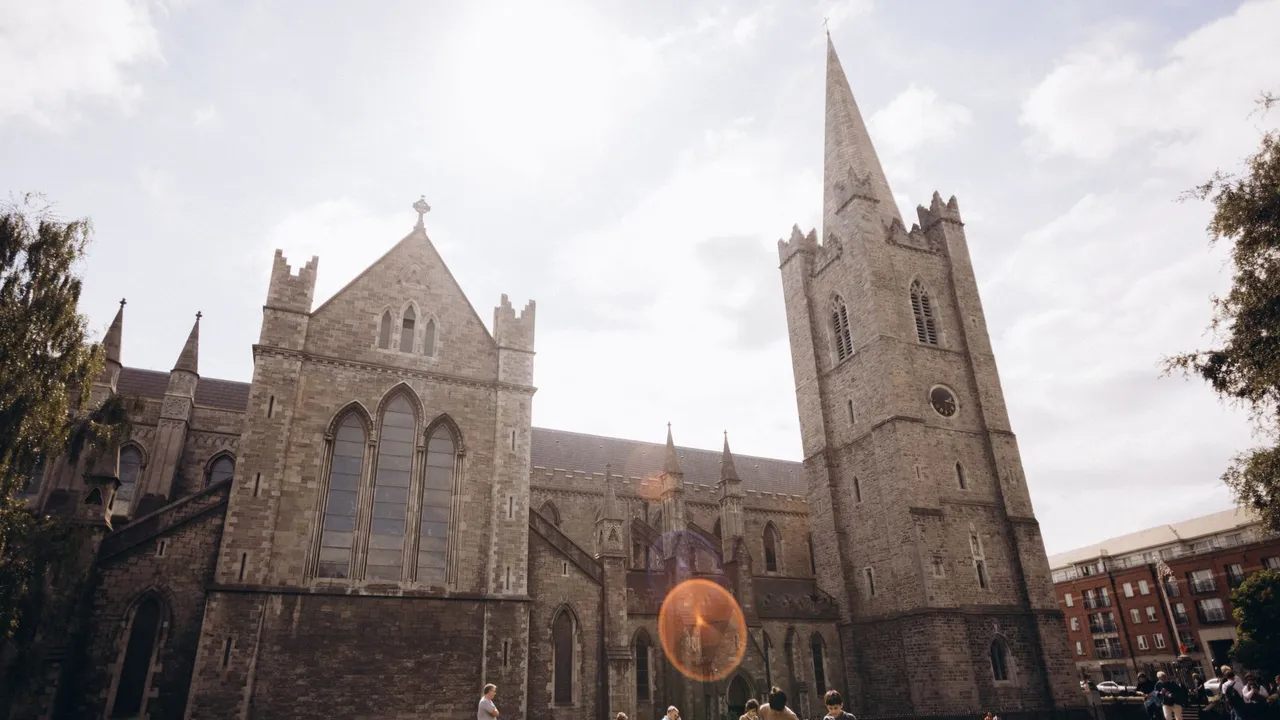
eSIM for Ireland 
Viasimo's Ireland eSIM starts at $1.29 for 500 MB over 1 day, running on Eir with 5G where available. Plans last 1 to 180 days, arrive by email in minutes and install from your phone's settings, with no app.
Works everywhere in Ireland
- Connacht
- Dublin
- Leinster
- Munster
- Ulster
Select your planIn stock
Duration
Quantity
1
Unlimited data · 3 Days$6.99







Unlimited data · 3 Days ×1
$6.99
Does my phone take an eSIM? Check now
Dial *#06# on your phone. If you see an EID number, your phone takes an eSIM. Most phones sold since 2019 do.
Not sure it works on your phone? Check compatibilityWhich networks does the Ireland eSIM use?
Host networks: Eir
Your eSIM picks one automatically; you do not choose or switch between them.
- Data
- 500 MB – 50 GB or unlimited
- Validity
- 1–180 days
- Speed
- 4G LTE / 5G
- Hotspot / tethering
- Supported on most devices
- Activation
- Starts when you first connect in your destination
- Speed management
- Roughly 2-3 GB per day at full speed, sometimes less depending on the local carrier, then reduced
- Top-ups
- Add more data from your account, before the plan expires
- Text messages (SMS)
- Data only: use an app for verification codes
- Unused validity
- 180 days before it must be installed
How much data do you need?
The allowances below are our sizing recommendations, not measurements. The plan beside each one is the cheapest option on this page that covers it.
| You are | Plan for | Cheapest plan that covers it |
|---|---|---|
| LightMaps, messaging and the occasional lookup | About 1 GB a week | $1.591 GB, 7 days |
| TypicalMaps, social, photos and some browsing | About 3 to 7 GB a week | $4.595 GB, 30 days |
| HeavyVideo streaming, video calls and uploads | 10 GB a week or more | $8.0010 GB, 30 days |
| Working or sharingTethering a laptop, calls and cloud sync | 20 GB a week or more | $13.99Unlimited, 7 days |
eSIM, local SIM or roaming?
Charged per day
Your carrier roaming
Queue and plastic
A SIM at the airport
$1.29
Viasimo, one bundle
Only the Viasimo figure is a price: it comes from today’s live catalog. The other two rows are directional, not quoted rates.
Important to know
- This is a data-only eSIM. It carries no calls or SMS on its own number.
- Your existing number stays on your primary SIM, so calls and verification texts keep working.
- Your phone must support eSIM, and some carrier-locked phones cannot install one.
- Signal varies with location, terrain, congestion and your handset. Dense urban areas are consistently better served than remote ones.
- 5G only works where the host network has deployed it and your phone supports it. Everywhere else it falls back to 4G LTE.
- The eSIM selects a host network automatically. You cannot pick or switch between them.
- Unlimited plans run at full speed up to a fair-use limit, then continue at a reduced speed. Read the fair usage policy
Frequently asked questions
Does an eSIM work in Ireland?
Yes. Your Ireland eSIM connects automatically the moment you arrive, with no roaming fees and nothing to set up at the airport. The host networks it can use are Eir. Coverage runs on 4G LTE and 5G where the network has rolled it out, and falls back to 4G elsewhere.
Do I get 5G in Ireland?
Yes, where it has been deployed. 5G runs on Eir in Ireland, and your eSIM uses it automatically on a 5G-capable phone, dropping back to 4G LTE outside covered areas. No country is covered everywhere, so 5G availability varies by location.
Which mobile network is best in Ireland?
It depends on the measure. Opensignal's January 2026 report found Three fastest on average at 60.9 Mbps and joint best with Vodafone for coverage experience, while Eir, the network this eSIM uses, led clearly on 5G availability at 85.1% of the time. In towns, Eir's 5G is a strong experience; in the remote west, download maps first.
Is there 5G in Ireland?
Yes, and Eir has the widest 5G reach of the three networks in day-to-day use: Opensignal found Eir users connected to 5G 85.1% of the time in its January 2026 report, against 72.9% on Three and 61.5% on Vodafone. With a 5G-capable phone you'll be on 5G across most cities and towns.
What app shows live bus times in Dublin?
TFI Live, the official Transport for Ireland app, shows real-time departures for Dublin Bus, Go-Ahead Ireland, Luas, DART and other Iarnród Éireann trains, plus Bus Éireann services nationwide. It includes a journey planner. Pair it with the TFI Leap Card Top-Up app if you use a Leap Card for cheaper, capped fares.
What number do I call for the coast guard in Ireland?
Dial 112 or 999 and ask for the Coast Guard. The same numbers cover the Gardaí, ambulance, fire service and mountain rescue. You'll need a voice line, so keep your home SIM active as this eSIM is data only, and charge your phone before cliff walks or beach days on the Atlantic coast.
Who helps tourists who are victims of crime in Ireland?
The Irish Tourist Assistance Service, known as Tourist SOS, gives free support to visitors affected by crime, including help with reporting to the Gardaí, replacing documents and contacting family. Its number is +353 1 666 9354. Report the crime to the Gardaí first, then contact the service.
How much data do I need for 7 days in Ireland?
For 7 days in Ireland, Viasimo sells 1 GB for $1.59 and unlimited data for $13.99. Our sizing recommendation, not a measurement: maps, messaging and the occasional lookup, about 1 GB a week; maps, social, photos and some browsing, about 3 to 7 GB a week. The data calculator on this site works it out from how you actually use your phone.
Installing, keeping your number, topping up and hotspot work the same everywhere: see how it works →
Ireland: what to know before you land
In Ireland this eSIM uses Eir, and Opensignal's January 2026 data found Eir users connected to 5G 85% of the time, well ahead of Three and Vodafone. Three is faster on average and has a better coverage score, so expect excellent 5G in towns and weaker spots in the rural west. For buses, Luas and trains, the TFI Live app does most of the work.
- Emergency
- 112 or 999
- Plugs
- G 230V
- Currency
- Euro (EUR)
Main airports
- DUB Dublin Airport
- SNN Shannon Airport
- ORK Cork Airport
- NOC Ireland West Airport Knock
Apps worth having TFI LiveTFI Leap Card Top-UpFREENOWWhatsAppMet Éireann
Eir against Three and Vodafone in Opensignal's January 2026 results
Ireland has three mobile networks: Eir, Three and Vodafone. This eSIM connects to Eir, which Opensignal's January 2026 report shows has a clear lead on one measure and trails on others.
| Eir | Three | Vodafone | |
|---|---|---|---|
| Average download speed | 50.6 Mbps | 60.9 Mbps | 43.1 Mbps |
| 5G availability (share of time with a 5G connection) | 85.1% | 72.9% | 61.5% |
| Coverage experience (0 to 10) | 7.8 | 8.35 | 8.35 |
| Reliability (100 to 1000) | 897 | 935 | 903 |
Eir's strength is 5G reach: its users spend far more of their time on 5G than customers of the other two. Three is fastest on average and, with Vodafone, scores higher for coverage experience, which measures how well each network serves the places people live, work and travel.
What that means for a visitor: in Dublin, Cork, Galway, Limerick and most towns, you'll usually be on Eir 5G with speeds more than enough for video calls and navigation. In remote parts of the west and north-west, where every network struggles, Eir's lower coverage score is a reason to download maps and directions before you set off rather than relying on a live connection.
TFI Live and Leap Card for Dublin Bus, Luas and DART
Public transport across Ireland is branded Transport for Ireland (TFI), and two of its free apps are worth installing before you arrive.
- TFI Live gives real-time departures and timetables for Dublin Bus, Go-Ahead Ireland, Bus Éireann, the Luas trams and Iarnród Éireann trains, including the DART along Dublin Bay. It has a journey planner built in, and you can save favourite stops and routes so the times load with a single tap.
- TFI Leap Card Top-Up lets you top up a Leap Card by holding it to your phone, check the balance, collect pre-paid tickets and see how close you are to the daily and weekly fare caps.
A Leap Card is the cheapest way to ride buses, Luas and DART in Dublin, and fares stop increasing once you reach the cap. Leap Cards are sold at shops displaying the Leap sign; after that you can manage it from the app.
Dublin Bus services are frequent but traffic can make them late, so live arrival times are more useful than printed timetables. Outside the cities, rural Bus Éireann and Local Link routes can run only a few times a day; check the last departure in TFI Live before you set off on a day trip.
112, 999 and help on the coast and in the mountains
In Ireland you can dial either 112 or 999 for the Gardaí (police), ambulance and fire service. The same numbers reach the Irish Coast Guard and mountain rescue teams, which is worth knowing on the cliff walks of Clare and Donegal, on beaches with strong currents, and on hill routes in Wicklow, Kerry and Connemara. Ask for the Coast Guard if someone is in difficulty in the sea or on cliffs.
These are voice calls, and this eSIM is data only, so keep your home SIM switched on alongside it. When you go walking, share your plan and expected return time with someone, and carry a charged power bank: a phone used for navigation in cold, wet weather loses battery quickly.
If you are the victim of a crime, the Irish Tourist Assistance Service (Tourist SOS) offers free help to visitors, from dealing with the Gardaí to replacing documents and contacting family. Its number is +353 1 666 9354; save it in your contacts before you travel.
For weather, Met Éireann, the national forecaster, issues colour-coded warnings for wind, rain and coastal flooding. Check them before ferry crossings and coastal drives, especially between autumn and spring.
Researched October 2026 · 3 sources
- insights.opensignal.com Ireland Mobile Network Experience Report, January 2026 (Opensignal)
- gov.uk Ireland travel advice: getting help (GOV.UK)
- transportforireland.ie TFI apps (Transport for Ireland)
Seven days in Ireland: Dublin, Galway, the Cliffs of Moher, Connemara and Killarney
A coast-to-coast first week for travellers who want Dublin's history, then the west: Galway city, the Burren and Cliffs of Moher, the lakes and mountains of Connemara and Killarney National Park, travelling by train and hire car.
When to go May to September brings the longest days and mildest weather, with June often the driest; expect rain and wind at any time of year, and short daylight hours from November to February.
-
Day 1 Dublin
Trinity College and Georgian Dublin
Airport coaches to the city centre take about 30 to 40 minutes.
Take the Dublin Express or Aircoach from the airport into the city. Start at Trinity College for the Book of Kells and the Long Room library, then walk through Grafton Street to St Stephen's Green and the Georgian squares around Merrion Square. Finish at the National Museum of Archaeology on Kildare Street, which holds the bog bodies and gold hoards.
Signal Eir 5G is widely available across central Dublin, and Opensignal rated Eir highest of the three Irish operators for 5G availability.
-
Day 2 Dublin
Dublin Castle, Kilmainham and the Liffey
Visit Dublin Castle and the Chester Beatty library in its grounds, then Christ Church Cathedral and St Patrick's Cathedral. In the afternoon, take the Luas or a bus west to Kilmainham Gaol, where leaders of the 1916 Rising were held and executed; book ahead, as tours sell out. Walk back along the Liffey quays past the Ha'penny Bridge.
Signal Strong 5G across the city; use the TFI Live app for real-time Luas and Dublin Bus times and tap on with a Leap Card or contactless.
-
Day 3 Galway
Train to Galway
Irish Rail from Dublin Heuston to Galway Ceannt takes about 2 hours 20 minutes.
Take a morning train from Dublin Heuston to Galway across the midlands. In the afternoon, walk Shop Street and Quay Street through the Latin Quarter, see the Spanish Arch beside the River Corrib, and visit Galway Cathedral. In the evening, walk the Salthill promenade along Galway Bay and, if you like, listen to traditional music in a pub in the Latin Quarter.
Signal Coverage is good along the rail line, with short dips across the midlands bogs; Galway city has 5G in the centre.
-
Day 4 Galway
The Burren and the Cliffs of Moher
Galway to the Cliffs of Moher is about 1.5 hours by car; tour coaches run daily.
Drive south around Galway Bay into the Burren, the limestone upland of County Clare. Stop at Poulnabrone dolmen, a Neolithic portal tomb, and Corcomroe Abbey. Continue to the Cliffs of Moher, which rise about 214 m above the Atlantic; walk the paved path towards O'Brien's Tower and stay behind the barriers. Return via Doolin and Ballyvaughan.
Signal Expect patchy coverage in the Burren and occasional weak spots on the coast road; the Cliffs of Moher visitor centre area has usable 4G.
-
Day 5 Galway
Connemara and Kylemore Abbey
Galway to Kylemore is about 1.5 hours by car.
Drive west into Connemara, through Oughterard and along the lakes to Kylemore Abbey, a nineteenth-century castle-style house with a Victorian walled garden beside Pollacapall Lough. Continue through the Inagh Valley between the Twelve Bens and the Maumturk Mountains, or walk the Diamond Hill trail in Connemara National Park at Letterfrack, about 2 to 3 hours return.
Signal This is the weakest day for signal: the Inagh Valley and the upper slopes of Diamond Hill have long gaps, so download offline maps before you leave Galway.
-
Day 6 Killarney
South to Killarney National Park
Galway to Killarney is about 3 hours by car via Limerick.
Drive south to Killarney, crossing the Shannon via the Limerick tunnel or the Killimer–Tarbert car ferry. In the afternoon, explore Killarney National Park: visit Muckross House and its gardens, walk to Torc Waterfall, and see the ruins of Muckross Abbey. In the evening, take a jaunting car or walk along Lough Leane to Ross Castle.
Signal Good coverage in Killarney town; inside the national park, 4G is reliable near Muckross House but weaker along the lakeshore paths and around Torc.
-
Day 7 Killarney
Gap of Dunloe and departure
Killarney to Dublin Heuston by train takes about 3 to 3.5 hours, usually changing at Mallow; Kerry Airport is about 20 minutes from Killarney.
Spend your last morning walking or cycling the Gap of Dunloe, a narrow mountain pass between the MacGillycuddy's Reeks and the Purple Mountain range, past five small lakes. Some tours return by boat across the Killarney lakes to Ross Castle. In the afternoon, fly home from Kerry Airport or take the train back to Dublin.
Signal Coverage is poor in parts of the Gap of Dunloe, especially at its narrowest point; it is strong again in Killarney and at the airport.
Staying connected on this route
- Download offline Google Maps for Clare, Connemara and Kerry before you leave Galway; mountain valleys in the west have gaps.
- Install TFI Live for Dublin buses, Luas and Irish Rail times, and buy train tickets in advance on the Irish Rail app.
- In an emergency on the coast or in the mountains, call 112 or 999 and ask for the Coast Guard or Mountain Rescue.
Itinerary sources · 5
- insights.opensignal.com Ireland mobile network experience report, January 2026 – Opensignal
- transportforireland.ie TFI apps – Transport for Ireland
- gov.uk Ireland getting help – GOV.UK
- cliffsofmoher.ie Cliffs of Moher Visitor Experience
- en.wikipedia.org Cliffs of Moher – Wikipedia
Information and verification
Each block below says what was checked and when. Anything we cannot date, we do not claim.
- Prices and plans
- Every price and allowance on this page is read from the live catalog, not typed in.
- Host networks
- The operator list comes from the network partner that carries this eSIM.
Transparent pricing
Ireland eSIM prices
| Data | Price | Per day |
|---|---|---|
| Unlimited | $6.99 | $2.33/day |
| Data | Price | Per day |
|---|---|---|
| Unlimited | $10.99 | $2.20/day |
| Data | Price | Per day |
|---|---|---|
| Unlimited | $18.99 | $1.90/day |
| Data | Price | Per day |
|---|---|---|
| 3 GBBest value | $3.29 | $0.11/day |
| 5 GB | $4.59 | $0.15/day |
| 10 GB | $8.00 | $0.27/day |
| 20 GB | $17.00 | $0.57/day |
| Unlimited | $50.00 | $1.67/day |
| Data | Price | Per day |
|---|---|---|
| Unlimited | $97.99 | $1.63/day |
| Data | Price | Per day |
|---|---|---|
| Unlimited | $149.99 | $1.67/day |
Going to more than one country?
Regional plans that also cover Ireland
Destinations
Popular eSIM destinations
Travel guides
Read before you go
