










Jul 31, 2026 | 10 minute read

Viasimo's Netherlands eSIM starts at $1.29 for 500 MB over 1 day, running on KPN and Vodafone with 5G where available. Plans last 1 to 180 days, arrive by email in minutes and install from your phone's settings, with no app.
Duration







Unlimited data · 3 Days ×1
$6.99
Dial *#06# on your phone. If you see an EID number, your phone takes an eSIM. Most phones sold since 2019 do.
Not sure it works on your phone? Check compatibilityHost networks: KPN / Vodafone
Your eSIM picks one automatically; you do not choose or switch between them.
The allowances below are our sizing recommendations, not measurements. The plan beside each one is the cheapest option on this page that covers it.
| You are | Plan for | Cheapest plan that covers it |
|---|---|---|
| LightMaps, messaging and the occasional lookup | About 1 GB a week | $1.591 GB, 7 days |
| TypicalMaps, social, photos and some browsing | About 3 to 7 GB a week | $4.595 GB, 30 days |
| HeavyVideo streaming, video calls and uploads | 10 GB a week or more | $8.0010 GB, 30 days |
| Working or sharingTethering a laptop, calls and cloud sync | 20 GB a week or more | $13.99Unlimited, 7 days |
Charged per day
Your carrier roaming
Queue and plastic
A SIM at the airport
$1.29
Viasimo, one bundle
Only the Viasimo figure is a price: it comes from today’s live catalog. The other two rows are directional, not quoted rates.
Yes. Your Netherlands eSIM connects automatically the moment you arrive, with no roaming fees and nothing to set up at the airport. The host networks it can use are KPN, Vodafone. Coverage runs on 4G LTE and 5G where the network has rolled it out, and falls back to 4G elsewhere.
Yes, where it has been deployed. 5G runs on KPN, Vodafone in Netherlands, and your eSIM uses it automatically on a 5G-capable phone, dropping back to 4G LTE outside covered areas. No country is covered everywhere, so 5G availability varies by location.
Yes. With OVpay you check in and out on trains, trams, buses and metros using a contactless Mastercard, Visa, Maestro or V PAY card, or a phone linked to them through Apple Pay or Google Wallet. In Amsterdam, GVB trips paid this way are capped at €10.50 a day. Always tap out with the same card or phone.
Yes. Trans Link Systems announced in January 2026 that the OV-chipkaart will be fully discontinued by 2027 and replaced by a new card, the OV-pas, which works with OVpay. Visitors can skip it entirely by tapping a contactless bank card or phone. Use up any balance left on an old card.
Not on KPN, which ran its 3G network until 31 March 2022 and reused the spectrum for 4G and 5G. KPN still runs 2G for basic calls, but mobile data in the Netherlands now depends on 4G and 5G. In weak spots, such as remote parts of the Wadden Islands, expect slow or no data rather than 3G.
Yes. Everyone aged 14 or over must be able to show identification, and GOV.UK tells British visitors to carry their passport. Fines are €100 for those aged 16 and over and €50 for 14- and 15-year-olds. Keep a photo of your passport on your phone as a backup, not a replacement.
For 7 days in Netherlands, Viasimo sells 1 GB for $1.59 and unlimited data for $13.99. Our sizing recommendation, not a measurement: maps, messaging and the occasional lookup, about 1 GB a week; maps, social, photos and some browsing, about 3 to 7 GB a week. The data calculator on this site works it out from how you actually use your phone.
Installing, keeping your number, topping up and hotspot work the same everywhere: see how it works →
In the Netherlands you no longer need a transport card: OVpay lets you check in and out on trains, trams, buses and metros with a contactless bank card or a phone wallet, and the old OV-chipkaart is due to be withdrawn by 2027. Your eSIM uses KPN and Vodafone. KPN switched off 3G in March 2022, so data runs on 4G and 5G.
Main airports
OVpay has run alongside the OV-chipkaart since 2022 and brings contactless payment to public transport across the Netherlands. You tap in when you board a train, tram, bus or metro and tap out at the end. No separate app or ticket is required.
According to Amsterdam's official visitor site:
Trans Link Systems announced in January 2026 that the OV-chipkaart will be fully discontinued by 2027, replaced by a new OV-pas card that works with OVpay. If you still have an old anonymous OV-chipkaart from a previous trip, use up the balance.
Two phone tips: tap out with the same card or phone you tapped in with, and keep your phone charged. A flat battery means no phone wallet and an incomplete journey. The OVpay app lets you check what you have been charged, which needs data.
The Netherlands has three national mobile networks:
Your eSIM connects to KPN and Vodafone. Between them they cover the country closely, and the Netherlands had around 22 million mobile connections in 2023, about 1.26 per person.
3G has gone. KPN's UMTS network ran until 31 March 2022 and its spectrum now carries 4G and 5G. KPN still operates a 2G GSM network for basic calls and older devices, but it is not something you will use for data. If an old travel guide talks about 3G fallback in the Dutch countryside, it is out of date: where 4G and 5G fade, for example on outer parts of the Wadden Islands, expect slow or no data rather than 3G.
With 4G and 5G as the base layer, video calls, map downloads and photo backups work well on trains between the Randstad cities.
Three Dutch rules and risks change how you carry your phone and documents.
You must be able to show ID. Anyone aged 14 or over must always be able to identify themselves. GOV.UK tells British visitors to carry their passport. Fines are €100 for those aged 16 and over and €50 for 14- and 15-year-olds. A photo of your passport on your phone is a useful backup, but it does not replace the document.
Pickpocketing is common. GOV.UK says it happens a lot in central Amsterdam and around Amsterdam Centraal, and that gangs work on the trains and trams between Schiphol and Centraal. One person distracts you while another takes your bag or phone. Do not leave your phone on a table or seat, and avoid sleeping on the airport train. An eSIM cannot be pulled out and reused like a plastic SIM, but you will still want to lock or erase a stolen phone remotely.
Fake police scams target tourists. Criminals posing as plain-clothes officers ask to check cash and cards, often citing a counterfeit money investigation. Real Dutch police rarely do this and do not carry shiny badges. If in doubt, ring the police non-emergency line, 0900 8844, to be put through to the nearest station. For emergencies, dial 112.
A train-based week that suits first-time visitors: two days of canals and museums in Amsterdam, then short hops to Haarlem and Zaanse Schans, Utrecht, Rotterdam's modern architecture, the windmills of Kinderdijk, Delft and The Hague, tapping in with a bank card throughout.
When to go Mid-March to mid-May for tulips, with Keukenhof open for about eight weeks in spring; June to September is mild and long-lit, while King's Day on 27 April packs Amsterdam and winter is grey but quiet.
Day 1 Amsterdam
Trains from Schiphol to Amsterdam Centraal take about 15 to 20 minutes; tap in and out with a contactless card.
Take the train from Schiphol to Amsterdam Centraal. Walk through the UNESCO-listed canal ring along Herengracht and Keizersgracht, then cross to the Museumplein. Spend the afternoon at the Rijksmuseum, where Rembrandt's Night Watch hangs in the Gallery of Honour, or at the Van Gogh Museum next door; book both ahead. End with a canal boat tour or a walk through Vondelpark.
Signal KPN and Vodafone 5G are strong across central Amsterdam. Signal can dip briefly in the tunnels under Centraal and on the Noord-Zuidlijn metro.
Day 2 Amsterdam
Start at the Anne Frank House on Prinsengracht; tickets are sold only online and are released six weeks ahead, so book early. Wander the narrow streets and hidden courtyards of the Jordaan, including the Begijnhof near Spui. In the afternoon, take the free ferry behind Centraal across the IJ to Amsterdam Noord for the EYE Film Museum and the A'DAM Lookout.
Signal Excellent 5G across the city and on the IJ ferries. Keep your Anne Frank House ticket saved offline.
Day 3 Amsterdam
About 20 minutes by train to Koog-Zaandijk for Zaanse Schans; Haarlem is about 15 minutes by train from Amsterdam.
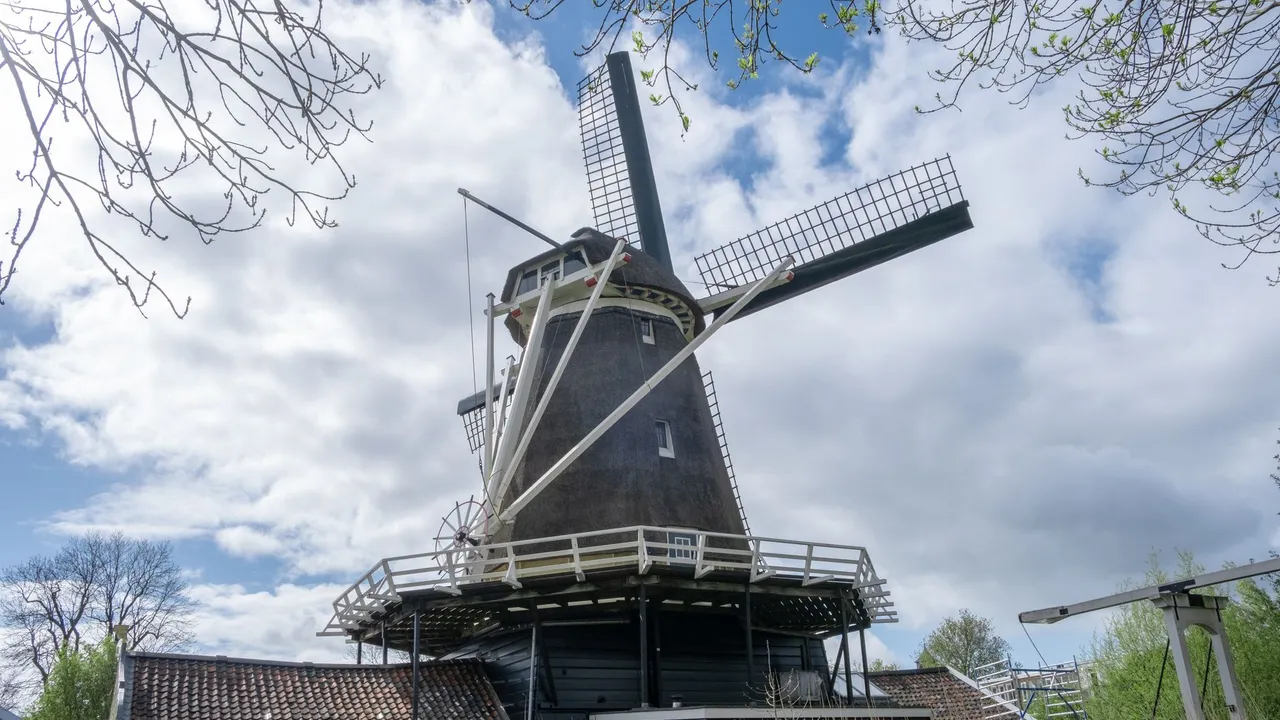
Go early to Zaanse Schans, a riverside collection of working windmills, wooden houses and craft workshops, before the tour buses arrive. Then take the train to Haarlem. See the Grote Kerk on the Grote Markt with its huge organ, and the Frans Hals Museum for Dutch Golden Age portraits. Walk the quiet canals and almshouse courtyards before returning to Amsterdam.
Signal Strong 4G and 5G throughout. Download the NS app to check connections between stops.
Day 4 Utrecht
About 25 to 30 minutes by train from Amsterdam Centraal.
Take the train to Utrecht. Climb the 465 steps of the Dom Tower, the tallest church tower in the Netherlands, for views across the country. Walk the Oudegracht, a canal with two-level wharves and cellars at water level, and visit the Centraal Museum. If you like design, book a tour of the Rietveld Schröder House, a UNESCO site and a landmark of the De Stijl movement.
Signal Good 5G in the city centre. The Dom Tower's stone staircase and the canal cellars can weaken signal.
Day 5 Rotterdam
Utrecht to Rotterdam is about 40 minutes by train; the Waterbus from Rotterdam's Erasmusbrug pier to Kinderdijk takes about 30 to 45 minutes depending on the route.
Travel to Rotterdam and drop your bags. Take the Waterbus up the river to Kinderdijk, a UNESCO site with 19 windmills built in the 18th century to drain the polders; walk or cycle along the dikes and go inside a museum mill. Back in Rotterdam, see the Cube Houses and the Markthal by Blaak station, then walk across the Erasmus Bridge at dusk.
Signal Good 4G and 5G in Rotterdam and on the Waterbus. Coverage is reliable along the Kinderdijk dikes, though it can be weaker inside the mills.
Day 6 Rotterdam
Rotterdam to Delft is about 15 minutes by train; Delft to The Hague is about 10 minutes.
Take the train to Delft. Walk the Markt between the New Church, where the Dutch royal family is buried, and the Renaissance town hall, and visit the Royal Delft pottery to see the blue-and-white earthenware being painted. Continue to The Hague and the Mauritshuis for Vermeer's Girl with a Pearl Earring, then take the tram to the beach at Scheveningen for the evening.
Signal Strong 5G in Delft, The Hague and on the coast at Scheveningen.
Day 7 Amsterdam
About 35 minutes by train from Rotterdam to Leiden, and about 15 to 20 minutes from Leiden to Schiphol.
Head to Leiden on your way to the airport. Walk the canals and visit the Hortus Botanicus, one of the oldest botanical gardens in the world, or the National Museum of Antiquities. In spring, you could instead take the express bus from Leiden Centraal to Keukenhof for its tulip gardens. Continue to Schiphol for your flight.
Signal Reliable 5G throughout. Download your boarding pass before Schiphol, where crowds can slow mobile data.
Each block below says what was checked and when. Anything we cannot date, we do not claim.
| Data | Price | Per day |
|---|---|---|
| Unlimited | $6.99 | $2.33/day |
| Data | Price | Per day |
|---|---|---|
| Unlimited | $10.99 | $2.20/day |
| Data | Price | Per day |
|---|---|---|
| Unlimited | $18.99 | $1.90/day |
| Data | Price | Per day |
|---|---|---|
| Unlimited | $97.99 | $1.63/day |
| Data | Price | Per day |
|---|---|---|
| Unlimited | $149.99 | $1.67/day |
Going to more than one country?
Destinations
Travel guides
Jul 31, 2026 | 10 minute read

Jul 13, 2026 | 7 minute read
As featured on
