eSIM for Botswana 
Viasimo's Botswana eSIM starts at $4.79 for 500 MB over 1 day, running on beMobile and Orange with 4G LTE where available. Plans last 1 to 180 days, arrive by email in minutes and install from your phone's settings, with no app.
Works everywhere in Botswana
- Central
- Chobe
- City of Francistown
- Gaborone
- Ghanzi
- Jwaneng
- Kgalagadi
Duration


Unlimited data · 3 Days ×1
$46.99
Does my phone take an eSIM? Check now
Dial *#06# on your phone. If you see an EID number, your phone takes an eSIM. Most phones sold since 2019 do.
Not sure it works on your phone? Check compatibilityWhich networks does the Botswana eSIM use?
Host networks: beMobile / Orange
Your eSIM picks one automatically; you do not choose or switch between them.
- Data
- 500 MB – 20 GB or unlimited
- Validity
- 1–180 days
- Speed
- 4G LTE
- Hotspot / tethering
- Supported on most devices
- Activation
- Starts when you first connect in your destination
- Speed management
- Roughly 2-3 GB per day at full speed, sometimes less depending on the local carrier, then reduced
- Top-ups
- Add more data from your account, before the plan expires
- Text messages (SMS)
- Data only: use an app for verification codes
- Connects via
- United Kingdom
- Unused validity
- 180 days before it must be installed
How much data do you need?
The allowances below are our sizing recommendations, not measurements. The plan beside each one is the cheapest option on this page that covers it.
| You are | Plan for | Cheapest plan that covers it |
|---|---|---|
| LightMaps, messaging and the occasional lookup | About 1 GB a week | $9.001 GB, 7 days |
| TypicalMaps, social, photos and some browsing | About 3 to 7 GB a week | $36.995 GB, 30 days |
| HeavyVideo streaming, video calls and uploads | 10 GB a week or more | $71.9910 GB, 30 days |
| Working or sharingTethering a laptop, calls and cloud sync | 20 GB a week or more | $104.99Unlimited, 7 days |
eSIM, local SIM or roaming?
Charged per day
Your carrier roaming
Queue and plastic
A SIM at the airport
$4.79
Viasimo, one bundle
Only the Viasimo figure is a price: it comes from today’s live catalog. The other two rows are directional, not quoted rates.
Important to know
- This is a data-only eSIM. It carries no calls or SMS on its own number.
- Your existing number stays on your primary SIM, so calls and verification texts keep working.
- Your phone must support eSIM, and some carrier-locked phones cannot install one.
- Signal varies with location, terrain, congestion and your handset. Dense urban areas are consistently better served than remote ones.
- The eSIM selects a host network automatically. You cannot pick or switch between them.
- Unlimited plans run at full speed up to a fair-use limit, then continue at a reduced speed. Read the fair usage policy
Frequently asked questions
Does an eSIM work in Botswana?
Yes. Your Botswana eSIM connects automatically the moment you arrive, with no roaming fees and nothing to set up at the airport. The host networks it can use are beMobile, Orange. Coverage runs on 4G LTE. There is no 5G on our host network in Botswana yet.
Do I get 5G in Botswana?
No. beMobile, Orange do not yet offer 5G to visitors in Botswana, so your eSIM connects over 4G LTE or slower. Anyone claiming 5G for this destination is quoting a spec sheet, not the network you will actually get.
Which mobile network has the best coverage in Botswana?
Orange and Mascom are the two big networks, with Orange ranked largest by BOCRA in 2025 at 46 percent of the market against Mascom's 40 percent and BTC's 14 percent. Both cover the towns and main roads well. Your eSIM uses Orange, whose 2G and 3G reach about 84 percent nationally and 4G about 70 percent.
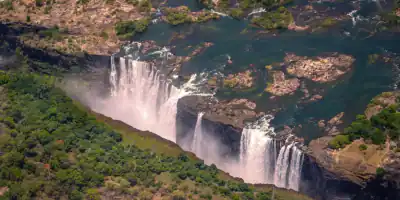
Will my Botswana eSIM work at Victoria Falls?
No. Victoria Falls is in Zimbabwe and Livingstone is in Zambia, so a Botswana plan stops working once you cross from Kasane or over the Kazungula Bridge. If you are doing a day trip from Chobe, add a plan for Zimbabwe or Zambia, or a multi-country Africa plan, and download offline maps before you go.
Is there mobile signal in Chobe National Park?
Partly. The Chobe riverfront near Kasane often has signal because it is close to town, so you can sometimes message from morning game drives. Further into the park, towards Savuti and Linyanti, coverage fades and most of the time you will have none. Lodges in remote areas usually have their own wifi, though it may be limited.
Can I pay by card in Botswana?
In Gaborone, Maun, Kasane and larger towns, yes, at most hotels, supermarkets and restaurants. In rural areas, small fuel stations and village shops you will often need cash in pula. ATMs that accept foreign cards are common in towns but scarce or absent in remote areas, so withdraw what you need before heading out.
How much data do I need for 7 days in Botswana?
For 7 days in Botswana, Viasimo sells 1 GB for $9.00 and unlimited data for $104.99. Our sizing recommendation, not a measurement: maps, messaging and the occasional lookup, about 1 GB a week; maps, social, photos and some browsing, about 3 to 7 GB a week. The data calculator on this site works it out from how you actually use your phone.
Installing, keeping your number, topping up and hotspot work the same everywhere: see how it works →
Botswana: what to know before you land
Your eSIM in Botswana connects to Orange, which the regulator BOCRA ranked as the largest mobile operator in 2025 with 46 percent of the market. Orange's 4G reaches noticeably fewer places than its basic voice network, so expect fast data in Gaborone, Francistown, Maun and Kasane and slower 3G or 2G in between, and carry cash once you leave the towns.
- Emergency
-
- 999 police
- 997 ambulance
- 998 fire
- Plugs
- MGD 230V
- Currency
- Botswana pula (BWP)
Main airports
- GBE Sir Seretse Khama International Airport
- MUB Maun Airport
- BBK Kasane Airport
Orange, Mascom and BTC: Botswana's three networks
Botswana has three mobile operators. BOCRA's 2025 tariff release put Orange at 46 percent of the market, Mascom at 40 percent and state-owned BTC at 14 percent. With about 4.4 million mobile subscriptions for a population of under 2.5 million, many locals carry two SIMs, often one from Orange and one from Mascom, to cover each other's gaps.
Orange's own coverage figures tell you what to expect. It quotes 2G at about 84 percent and 3G at about 83 percent nationally, but 4G at roughly 70 percent. In practice that means you can usually send a WhatsApp message or check a booking in a village or at a roadside stop, while video calls and large uploads are best left for the towns.
Orange was the first Orange company in Africa to launch 5G, in November 2022, starting in Greater Gaborone and Francistown. Your eSIM plan runs on Orange's 4G/LTE network rather than its 5G, which makes no real difference for maps, messaging and safari logistics.
Kasane, Kazungula and day trips to Victoria Falls
Kasane, the gateway to Chobe National Park, sits where Botswana meets Zambia, Zimbabwe and Namibia's Caprivi Strip. Many visitors staying there take a day trip to Victoria Falls, about 80 km away by road in Zimbabwe, or cross the Kazungula Bridge into Zambia towards Livingstone.
Your eSIM covers Botswana only. Once you are over the border it will stop delivering data, and close to the border your phone may show foreign networks that it cannot use. If Victoria Falls or Livingstone is part of your plan:
- Add a separate plan for Zimbabwe or Zambia, or a multi-country Africa plan, before the trip.
- Download offline maps of the Victoria Falls town area and the falls park before you leave Kasane.
- Share your tour operator's contact details with someone at home, because your Botswana connection won't be there to message them on the day.
The Chobe riverfront itself is close enough to Kasane that you will often keep a signal on morning game drives near town. Deeper in the park, towards Savuti, expect it to fade out.
Cash, cards and ATMs beyond Gaborone and Maun
Botswana's currency is the pula (BWP). Cards are widely accepted in Gaborone and in the larger towns, but often not in rural areas, at small fuel stations or at village shops, according to the US State Department. ATMs that take foreign cards work in the main towns but may be limited or missing entirely in remote areas, so draw cash in Maun, Kasane, Francistown or Ghanzi before heading into the bush. Amounts above 10,000 pula must be declared when you arrive or leave.
Mobile money is how many Batswana pay each other, and Orange Money is one of the main services, but it requires a registered local SIM and account, so it isn't an option for most visitors.
Two entry rules catch people out. You need at least three blank pages in your passport, and transit airports may ask for the same. Children need full birth certificates, plus a notarised consent letter from any parent who isn't travelling, a requirement that also applies if you route through Johannesburg.
Self-driving the A1, the Nata to Maun road and the Kalahari
Self-drive safaris are popular here, and the roads are where data matters most for safety. To drive you need an international driving permit as well as your licence, and traffic keeps to the left.
The State Department warns that highways often have no shoulders or lighting, livestock and wild animals wander onto the tarmac, and accident risk rises sharply at weekends and on the Fridays at the end of the month when wages are paid. Avoid driving after dark, when donkeys and cattle are almost impossible to see.
The A1 from Gaborone to Francistown has the most continuous signal. The A3 from Nata to Maun and the long road through Ghanzi towards Namibia have long stretches with no coverage. Before you set off on those sections:
- Download offline maps covering the whole route, including fuel stops.
- Send your expected arrival time to your lodge or a contact.
- Keep a printed copy of your car hire breakdown number, since you may need to borrow a phone or flag a driver down to call it.
Researched October 2026 · 4 sources
- btw.media Orange Botswana and the price of covering a thin mobile market (BTW Media)
- trade.gov Botswana Country Commercial Guide: Telecommunications (US International Trade Administration)
- travel.state.gov Botswana International Travel Information (US State Department)
- en.wikipedia.org List of emergency telephone numbers (Wikipedia)
Seven days in Botswana: Maun, the Okavango Delta, Makgadikgadi and Chobe
A classic northern safari week for first-timers: fly into Maun, spend two nights in the Okavango Delta, cross to the Makgadikgadi salt pans, then drive north to Kasane for the Chobe River, flying home from Kasane.
When to go May to October is the dry season, when animals gather at water and the Delta floods peak around June and July; November to April brings heat, rain, green landscapes and migrant birds, with some sandy tracks becoming muddy.
-
Day 1 Maun
Maun and a flight over the Delta
Fly into Maun (MUB), usually via Johannesburg or Gaborone.
Land at Maun, the small town that serves as the Delta's gateway. Draw cash in pula at a town ATM while you can. In the afternoon, take a one-hour scenic flight in a light aircraft or helicopter from the airport for a first view of the channels, islands and herds of elephant and buffalo below. Spend the evening sorting your Delta luggage, since bush planes have strict soft-bag weight limits.
Signal Orange 4G is good in Maun town and at the airport, so this is the place to download offline maps and send anything large before the Delta.
-
Day 2 Okavango Delta
Into the Okavango Delta by bush plane
Light aircraft from Maun, typically 20 to 45 minutes depending on the camp.
Fly by light aircraft from Maun to a camp in the Delta, a short hop over the floodplains. After settling in, head out by mokoro, the dugout canoe pushed by a poler, through papyrus and lily-covered channels, looking for reed frogs, kingfishers and red lechwe. Return to camp for a sundowner and listen for hippos at night.
Signal Expect no mobile signal at most Delta camps. Some offer limited wifi in the main area; tell people at home before you board that you will be out of touch.
-
Day 3 Okavango Delta
Okavango Delta: walking safari and game drive
Set out at dawn on a guided bush walk on one of the islands, learning to read tracks and approaching animals on foot with an armed or experienced guide. Rest through the midday heat. In the late afternoon, take a game drive or another mokoro outing, depending on water levels, for elephants, buffalo and, with luck, lions or wild dogs.
Signal Still no reliable mobile coverage; your eSIM will most likely show no service all day, so rely on camp wifi if offered.
-
Day 4 Gweta (Makgadikgadi)
Back to Maun and east to Gweta
Light aircraft back to Maun, then about 3 hours by road on the A3 (roughly 200 km).
Fly back to Maun in the morning, collect your vehicle or transfer, and drive east along the A3 to Gweta, on the edge of the Makgadikgadi Pans. Stop to fill up in Maun first. In the late afternoon, go out with a guide to see the habituated meerkat colonies near the pans, and watch the sunset over the grasslands and baobabs.
Signal 4G in Maun, then long stretches of the A3 with no coverage at all until Gweta, which has basic 3G or 2G. Send your expected arrival time before leaving Maun.
-
Day 5 Gweta (Makgadikgadi)
Makgadikgadi Pans
Spend the day on the salt pans with a guide, one of the flattest places on earth. In the dry season, cross Ntwetwe Pan by quad bike or 4x4 and, if offered, sleep out under the stars on the pan surface. In the wet season, the grasslands host zebra and wildebeest migrations and flamingos. Do not drive onto the pans yourself without local knowledge, as the crust can hide soft mud.
Signal There is no mobile signal out on the pans; Gweta village has weak coverage for messaging only.
-
Day 6 Kasane
North to Kasane and a Chobe River cruise
About 400 km and 5 hours by road via Nata; avoid driving after dark because of livestock and wildlife.
Leave early for the long drive via Nata to Kasane, watching for elephants crossing the road north of Nata. In the afternoon, take a sunset boat cruise on the Chobe River along the edge of Chobe National Park, where herds of elephant come down to drink and swim, with hippos, crocodiles and buffalo on the banks.
Signal Gaps for much of the Nata to Kasane road, then Orange 4G in Kasane. On the river, coverage near town is often good, but your phone may grab Namibian networks it cannot use.
-
Day 7 Kasane
Chobe riverfront game drive
Kasane airport (BBK) is minutes from Sedudu Gate.
Enter Chobe National Park at Sedudu Gate at opening time for a morning game drive along the riverfront, looking for lion, sable antelope and the large elephant herds of the dry season. Return to Kasane for lunch and fly out from Kasane, or cross into Zimbabwe for Victoria Falls with a separate data plan.
Signal The riverfront near Kasane often has signal for messages; further into the park it fades. Your Botswana eSIM will not work in Zimbabwe or Zambia.
Staying connected on this route
- Download offline maps of the A3 from Maun to Nata and the Nata to Kasane road; there are long sections with no signal.
- Your plan runs on Orange 4G, which reaches fewer places than its voice network: messaging usually works in villages, video calls only in towns.
- Tell family that Delta camps have no mobile signal, and give them the camp's contact details.
- Add a Zimbabwe or Zambia plan if Victoria Falls is on your list.
Itinerary sources · 4
- whc.unesco.org Okavango Delta (UNESCO World Heritage)
- en.wikivoyage.org Maun (Wikivoyage)
- en.wikivoyage.org Chobe National Park (Wikivoyage)
- gov.uk Botswana travel advice (GOV.UK)
Information and verification
Each block below says what was checked and when. Anything we cannot date, we do not claim.
- Prices and plans
- Every price and allowance on this page is read from the live catalog, not typed in.
- Host networks
- The operator list comes from the network partner that carries this eSIM.
Botswana eSIM prices
| Data | Price | Per day |
|---|---|---|
| Unlimited | $46.99 | $15.66/day |
| Data | Price | Per day |
|---|---|---|
| Unlimited | $73.99 | $14.80/day |
| Data | Price | Per day |
|---|---|---|
| Unlimited | $144.99 | $14.50/day |
| Data | Price | Per day |
|---|---|---|
| 3 GBBest value | $23.99 | $0.80/day |
| 5 GB | $36.99 | $1.23/day |
| 10 GB | $71.99 | $2.40/day |
| 20 GB | $139.99 | $4.67/day |
| Unlimited | $394.99 | $13.17/day |
| Data | Price | Per day |
|---|---|---|
| Unlimited | $779.99 | $13.00/day |
| Data | Price | Per day |
|---|---|---|
| Unlimited | $1,169.99 | $13.00/day |
| Data | Price | Per day |
|---|---|---|
| Unlimited | $2,334.99 | $12.97/day |
Going to more than one country?
Regional plans that also cover Botswana


Destinations