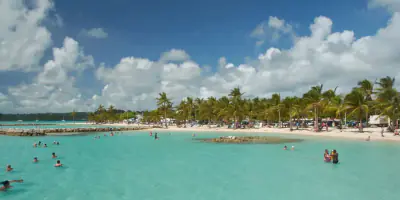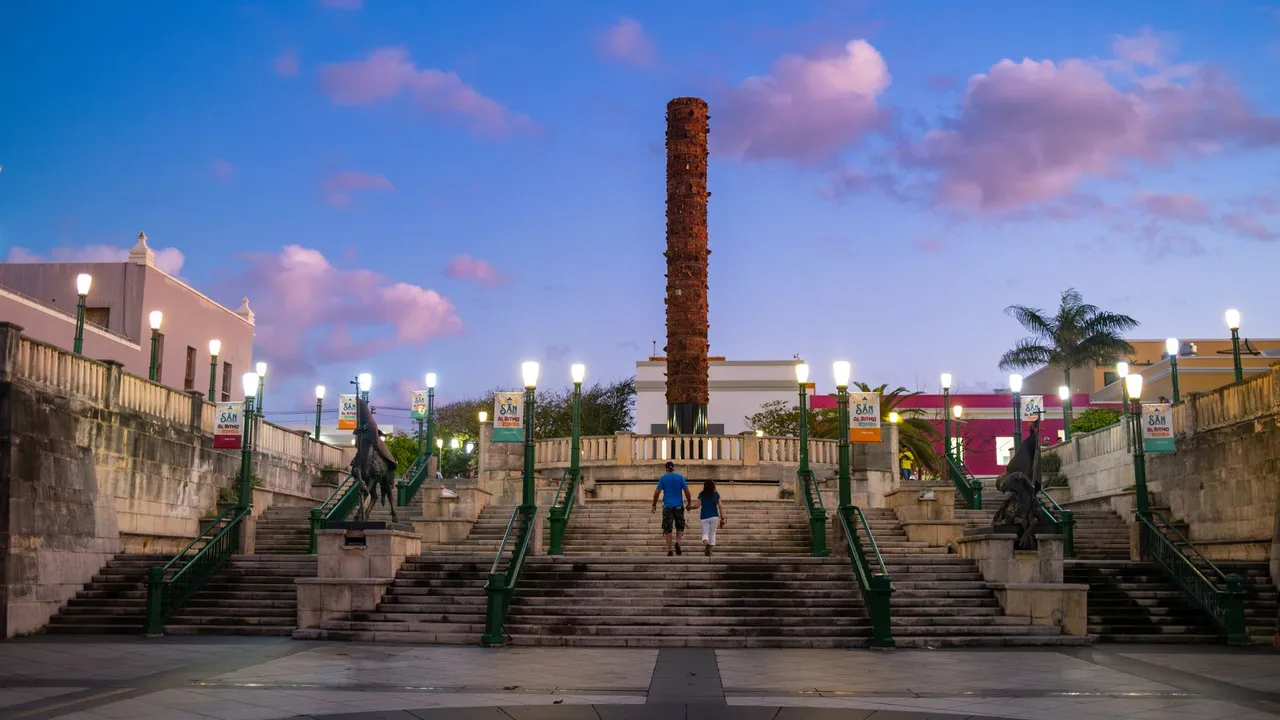
eSIM for Martinique 
Viasimo's Martinique eSIM starts at $1.59 for 1 GB over 7 days, running on Orange with 5G where available. Plans last 1 to 180 days, arrive by email in minutes and install from your phone's settings, with no app.
Works everywhere in Martinique
- Martinique
Duration







Unlimited data · 3 Days ×1
$6.99
Does my phone take an eSIM? Check now
Dial *#06# on your phone. If you see an EID number, your phone takes an eSIM. Most phones sold since 2019 do.
Not sure it works on your phone? Check compatibilityWhich networks does the Martinique eSIM use?
Host networks: Orange
Your eSIM picks one automatically; you do not choose or switch between them.
- Data
- 1 GB – 20 GB or unlimited
- Validity
- 1–180 days
- Speed
- 4G LTE / 5G
- Hotspot / tethering
- Supported on most devices
- Activation
- Starts when you first connect in your destination
- Speed management
- Roughly 2-3 GB per day at full speed, sometimes less depending on the local carrier, then reduced
- Top-ups
- Add more data from your account, before the plan expires
- Text messages (SMS)
- Data only: use an app for verification codes
- Unused validity
- 180 days before it must be installed
How much data do you need?
The allowances below are our sizing recommendations, not measurements. The plan beside each one is the cheapest option on this page that covers it.
| You are | Plan for | Cheapest plan that covers it |
|---|---|---|
| LightMaps, messaging and the occasional lookup | About 1 GB a week | $1.591 GB, 7 days |
| TypicalMaps, social, photos and some browsing | About 3 to 7 GB a week | $4.595 GB, 30 days |
| HeavyVideo streaming, video calls and uploads | 10 GB a week or more | $8.0010 GB, 30 days |
| Working or sharingTethering a laptop, calls and cloud sync | 20 GB a week or more | $13.99Unlimited, 7 days |
eSIM, local SIM or roaming?
Charged per day
Your carrier roaming
Queue and plastic
A SIM at the airport
$1.59
Viasimo, one bundle
Only the Viasimo figure is a price: it comes from today’s live catalog. The other two rows are directional, not quoted rates.
Important to know
- This is a data-only eSIM. It carries no calls or SMS on its own number.
- Your existing number stays on your primary SIM, so calls and verification texts keep working.
- Your phone must support eSIM, and some carrier-locked phones cannot install one.
- Signal varies with location, terrain, congestion and your handset. Dense urban areas are consistently better served than remote ones.
- 5G only works where the host network has deployed it and your phone supports it. Everywhere else it falls back to 4G LTE.
- The eSIM selects a host network automatically. You cannot pick or switch between them.
- Unlimited plans run at full speed up to a fair-use limit, then continue at a reduced speed. Read the fair usage policy
Frequently asked questions
Does an eSIM work in Martinique?
Yes. Your Martinique eSIM connects automatically the moment you arrive, with no roaming fees and nothing to set up at the airport. The host networks it can use are Orange. Coverage runs on 4G LTE and 5G where the network has rolled it out, and falls back to 4G elsewhere.
Do I get 5G in Martinique?
Yes, where it has been deployed. 5G runs on Orange in Martinique, and your eSIM uses it automatically on a 5G-capable phone, dropping back to 4G LTE outside covered areas. No country is covered everywhere, so 5G availability varies by location.
Is Mount Pelée safe to hike right now?
Mount Pelée has been on yellow (restless) alert since 6 December 2020. In May 2025 the Martinique Volcano Observatory reported hundreds of small earthquakes but no sign of an imminent eruption. Check the observatory's latest bulletin before you set out, follow any trail closures, and download your route, because signal fades on the upper slopes.
Which Paris airport do flights to Martinique leave from?
It depends on the airline. Air France flies to Martinique Aimé Césaire (FDF) from Paris-Charles de Gaulle, while Air Caraïbes and Corsair fly from Paris-Orly. American Airlines connects with Miami, and Air Canada and Air Transat fly from Montreal. Check your ticket before planning a train or connecting flight in Paris.
Are protests disrupting travel in Martinique?
They have done. In October 2024 protesters occupied the tarmac at Aimé Césaire airport, disrupting flights. The UK Foreign Office's current advice mentions restrictions on fuel sales, and warns that further restrictions and curfews may be imposed at short notice and that flights may be affected. Keep airline alerts on and check your transport operator before you travel.
What are the emergency numbers in Martinique?
As in mainland France, 112 reaches all emergency services. You can also dial 15 for an ambulance, 17 for the police and 18 for the fire service. The eSIM is data-only, so make these calls from your home SIM, which can reach emergency services while roaming, or from a landline.
How much data do I need for 7 days in Martinique?
For 7 days in Martinique, Viasimo sells 1 GB for $1.59 and unlimited data for $13.99. Our sizing recommendation, not a measurement: maps, messaging and the occasional lookup, about 1 GB a week; maps, social, photos and some browsing, about 3 to 7 GB a week. The data calculator on this site works it out from how you actually use your phone.
Installing, keeping your number, topping up and hotspot work the same everywhere: see how it works →
Martinique: what to know before you land
In Martinique your eSIM connects to Orange, with 5G where it is available. Data is most useful for the things that can change your plans at short notice: flight disruption at Aimé Césaire after the protests of October 2024, volcano bulletins for Mount Pelée, which has been on yellow alert since 2020, and storm tracking from June to November.
- Emergency
-
- 112 or 15 ambulance, 17 police, 18 fire
- Plugs
- CE 220V
- Currency
- Euro (EUR)
Main airports
- FDF Martinique Aimé Césaire International Airport
Flights into Aimé Césaire (FDF) and protest disruption
Martinique Aimé Césaire International (FDF) is at Le Lamentin, just outside Fort-de-France. It has a single 3,000 m runway and handled about 1.86 million passengers in 2023. Which Paris airport you use depends on the airline. Air France flies from Charles de Gaulle, while Air Caraïbes and Corsair use Orly. Across the Atlantic, American Airlines flies from Miami, and Air Canada and Air Transat from Montreal, with seasonal Toronto and Québec City flights. Air Caraïbes, Air France, Caribbean Airlines and smaller carriers link the island with Guadeloupe, St Martin, Cayenne and neighbouring islands.
In October 2024, protesters occupied the airport tarmac and flights were disrupted. The UK Foreign Office's current advice notes restrictions on fuel sales and warns that further restrictions and curfews may be imposed at short notice, with possible disruption to transport, including flights. Keep your airline's app installed with notifications on, and check the status of your flight on the morning you travel. Your eSIM lets you do that and rebook from the roadside rather than waiting until you reach hotel wifi.
Mount Pelée's yellow alert and the UNESCO north
Mount Pelée rises to 1,397 m above the north of the island. Its 1902 eruption destroyed the town of Saint-Pierre in minutes, killing an estimated 29,000 to 30,000 people. In 2023 the volcano and the surrounding rainforest and peaks were inscribed as a UNESCO World Heritage Site, the Volcanoes and Forests of Mount Pelée and the Pitons of Northern Martinique.
The volcano is active and closely watched. The Martinique Volcano Observatory raised its alert level from green (normal) to yellow (restless) on 6 December 2020. In May 2025 it reported hundreds of small earthquakes but no sign of an imminent eruption. The UK Foreign Office also notes that the volcano is monitored and advises following local guidance.
If you plan to hike Pelée or explore Saint-Pierre, check the observatory's latest bulletin on the morning you go. Trails can close when activity or weather changes. Download offline maps and your route before you head up, because the higher slopes are where your phone is most likely to lose signal. Tell someone at your accommodation when you expect to be back.
Storm season from June to November and Martinique's emergency numbers
The Atlantic hurricane season runs from June to November. The Foreign Office advises following updates from the World Meteorological Organization and the US National Hurricane Center. In practice, that means checking the National Hurricane Center's outlook on your phone every day if you travel in late summer or autumn, and acting early when a system is forecast to pass near the Lesser Antilles. Charge your phone and a power bank whenever a storm warning is issued, because power and mobile service can both be interrupted afterwards.
Crime levels are low. The Foreign Office still advises avoiding isolated places, including beaches, after dark, not carrying large amounts of cash and using hotel safes. It also cautions that some dive schools may not meet safety standards, so check operators' credentials and equipment before you book.
Martinique uses France's emergency numbers. 112 reaches all services, or dial 15 for an ambulance, 17 for the police and 18 for the fire service. The eSIM is data-only, so call from your home SIM. French driving laws apply, and depending on your licence you may need an international driving permit.
Researched October 2026 · 4 sources
- gov.uk Martinique travel advice: safety and security (GOV.UK)
- gov.uk Martinique travel advice: getting help (GOV.UK)
- en.wikipedia.org Martinique Aimé Césaire International Airport (Wikipedia)
- en.wikipedia.org Mount Pelée (Wikipedia)
Seven days in Martinique: Fort-de-France, Saint-Pierre, Mount Pelée and the southern beaches
A week that splits Martinique in two: the volcanic, rainforested north with Saint-Pierre and Mount Pelée, then the Atlantic peninsulas and calmer beaches of the south. A hire car is the practical way to do it, as buses are sparse outside Fort-de-France.
When to go December to May is the drier season and the best time for hiking Mount Pelée; June to November is hurricane season and the wettest period, with the highest risk from August to October.
-
Day 1 Fort-de-France
Fort-de-France
Aimé Césaire airport (FDF) at Le Lamentin is about 15–25 minutes from central Fort-de-France by road, depending on traffic.
Start at La Savane, the waterfront park, then cross to the Bibliothèque Schœlcher, an ornate iron-and-glass library first built for the 1889 Paris exhibition. Visit the Saint-Louis Cathedral and the covered Grand Marché for spices, rum and tropical fruit. In the afternoon, take a guided tour of Fort Saint-Louis, still a working naval base, and walk along the seafront at the Pointe Simon.
Signal Orange 4G is strong across Fort-de-France, with 5G in parts of the city and around the airport.
-
Day 2 North (Saint-Pierre or Le Carbet)
The Route de la Trace and Saint-Pierre
About 1 hour 15 minutes by road from Fort-de-France to Saint-Pierre via the Route de la Trace, plus stops.
Drive north on the Route de la Trace, a winding road through rainforest. Stop at the Jardin de Balata, a botanical garden with a rope-bridge walk through the treetops, then continue past the Pitons du Carbet to Le Morne-Rouge. Drop down to Saint-Pierre, destroyed by Mount Pelée in 1902, and walk among the ruins of the theatre and the prison cell where Ludger Sylbaris survived the eruption. Visit the Mémorial de la catastrophe de 1902.
Signal The Route de la Trace has patchy coverage in the forest sections; Saint-Pierre has reliable 4G.
-
Day 3 North (Saint-Pierre or Le Carbet)
Hiking Mount Pelée
The Aileron car park is about 20–25 minutes by road from Saint-Pierre.
Check the Martinique Volcano Observatory's bulletin and the trail status first. Start early on the Aileron trail from the car park above Le Morne-Rouge, which climbs steeply to the crater rim; allow about four to five hours there and back, and bring a waterproof, as the summit is often in cloud. In the afternoon, visit the Depaz distillery on the slopes above Saint-Pierre to see how agricole rum is made from fresh cane juice.
Signal Signal fades on the upper trail and can vanish near the summit in cloud; download your route and tell your accommodation when you expect to be back.
-
Day 4 Le François or Le Vauclin
The far north and the Caravelle peninsula
Saint-Pierre to Grand-Rivière takes about 45 minutes; Grand-Rivière to the Caravelle peninsula about 1 hour 15 minutes.
Drive the north coast to Grand-Rivière, a fishing village at the end of the road, and look out at the cliffs towards Dominica. Then cross to the Atlantic side via Basse-Pointe and continue south to the Caravelle peninsula, a nature reserve. Walk the trail from the ruins of the Château Dubuc, an 18th-century plantation estate, through dry forest and mangroves to the lighthouse viewpoint, then head to your base on the south-east coast.
Signal Grand-Rivière and the north Atlantic coast have weak spots; the Caravelle trails have usable 4G for most of the route.
-
Day 5 Le François or Le Vauclin
Le François: Habitation Clément and the Fonds Blancs
Habitation Clément is a few minutes from Le François by road.
Visit Habitation Clément, a former sugar and rum estate with a creole house, botanical gardens and a contemporary art foundation. In the afternoon, take a boat trip from Le François to the îlets and the Fonds Blancs, sandbanks inside the reef where you can stand waist-deep in clear water far from the shore. Some trips stop at the Baignoire de Joséphine, the best known of the shallows.
Signal 4G is good in Le François; out on the Fonds Blancs signal usually holds because you are still close to the coast.
-
Day 6 South (Sainte-Anne or Les Trois-Îlets)
Sainte-Anne and the Plage des Salines
About 40 minutes by road from Le François to Sainte-Anne.
Drive south to Sainte-Anne, a small town with a seafront church and morning market. Continue to the Plage des Salines, a long, palm-backed beach at the southern tip, and swim in its calm water. Walk part of the coastal trail east to the Savane des Pétrifications, a dry, rocky landscape with views over the Atlantic coast, and take water and sun protection, as there is little shade.
Signal Sainte-Anne and Les Salines have good 4G, but signal weakens along the coastal trail towards the Savane des Pétrifications.
-
Day 7 Fort-de-France
Le Diamant, Anses d'Arlet and the boat to Fort-de-France
Le Diamant to the Anses d'Arlet takes about 20 minutes; the shuttle boat from Les Trois-Îlets to Fort-de-France takes about 20 minutes.
Drive west to Le Diamant to see Diamond Rock offshore and the Cap 110 memorial at Anse Caffard, a group of white statues commemorating a slave ship wrecked there in 1830. Continue to the Anses d'Arlet, where you can snorkel with turtles in the bay at Grande Anse. In the afternoon, take the shuttle boat from Les Trois-Îlets across the bay to Fort-de-France for your final evening or flight.
Signal 4G is reliable along the south-west coast and on the short boat crossing, and strong in Fort-de-France and at the airport.
Staying connected on this route
- Check the volcano observatory's bulletin and the trail status on your phone before hiking Mount Pelée.
- Since late September 2026 the FCDO has reported unrest, fuel restrictions and short-notice curfews: check its advice and your airline's app before driving or heading to Aimé Césaire.
- Download offline maps of the Route de la Trace and the north coast, where signal is patchy in the forest.
- In storm season, charge a power bank whenever a warning is issued, as power and mobile service can be cut.
Itinerary sources · 4
Information and verification
Each block below says what was checked and when. Anything we cannot date, we do not claim.
- Prices and plans
- Every price and allowance on this page is read from the live catalog, not typed in.
- Host networks
- The operator list comes from the network partner that carries this eSIM.
Martinique eSIM prices
| Data | Price | Per day |
|---|---|---|
| Unlimited | $6.99 | $2.33/day |
| Data | Price | Per day |
|---|---|---|
| Unlimited | $10.99 | $2.20/day |
| Data | Price | Per day |
|---|---|---|
| Unlimited | $18.99 | $1.90/day |
| Data | Price | Per day |
|---|---|---|
| 3 GBBest value | $3.29 | $0.11/day |
| 5 GB | $4.59 | $0.15/day |
| 10 GB | $8.00 | $0.27/day |
| 20 GB | $16.00 | $0.53/day |
| Unlimited | $50.00 | $1.67/day |
| Data | Price | Per day |
|---|---|---|
| Unlimited | $97.99 | $1.63/day |
| Data | Price | Per day |
|---|---|---|
| Unlimited | $149.99 | $1.67/day |
| Data | Price | Per day |
|---|---|---|
| Unlimited | $299.99 | $1.67/day |
Going to more than one country?
Regional plans that also cover Martinique



Destinations