










eSIM for Malaysia 
Viasimo's Malaysia eSIM starts at $1.29 for 500 MB over 7 days, running on CelcomDigi, Maxis, and Tune Talk with 5G where available. Plans last 3 to 180 days, arrive by email in minutes and install from your phone's settings, with no app.
Works everywhere in Malaysia
- Johor
- Johor Bahru
- Kedah
- Kelantan
- Kuala Lumpur
- Labuan
- Langkawi
Select your planIn stock
Duration
Quantity
1
Unlimited data · 3 Days$8.00







Unlimited data · 3 Days ×1
$8.00
Does my phone take an eSIM? Check now
Dial *#06# on your phone. If you see an EID number, your phone takes an eSIM. Most phones sold since 2019 do.
Not sure it works on your phone? Check compatibilityWhich networks does the Malaysia eSIM use?
Host networks: CelcomDigi / Maxis / Tune Talk
Your eSIM picks one automatically; you do not choose or switch between them.
- Data
- 100 MB – 50 GB or unlimited
- Validity
- 3–180 days
- Speed
- 4G LTE / 5G
- Hotspot / tethering
- Supported on most devices
- Activation
- Automatic on arrival
- Speed management
- Roughly 2-3 GB per day at full speed, sometimes less depending on the local carrier, then reduced
- Top-ups
- Add more data from your account, before the plan expires
- Text messages (SMS)
- Data only: use an app for verification codes
- Connects via
- Singapore
- Unused validity
- 180 days before it must be installed
How much data do you need?
The allowances below are our sizing recommendations, not measurements. The plan beside each one is the cheapest option on this page that covers it.
| You are | Plan for | Cheapest plan that covers it |
|---|---|---|
| LightMaps, messaging and the occasional lookup | About 1 GB a week | $1.791 GB, 7 days |
| TypicalMaps, social, photos and some browsing | About 3 to 7 GB a week | $5.005 GB, 30 days |
| HeavyVideo streaming, video calls and uploads | 10 GB a week or more | $9.0010 GB, 30 days |
| Working or sharingTethering a laptop, calls and cloud sync | 20 GB a week or more | $12.9920 GB, 15 days |
eSIM, local SIM or roaming?
Charged per day
Your carrier roaming
Queue and plastic
A SIM at the airport
$1.29
Viasimo, one bundle
Only the Viasimo figure is a price: it comes from today’s live catalog. The other two rows are directional, not quoted rates.
Important to know
- This is a data-only eSIM. It carries no calls or SMS on its own number.
- Your existing number stays on your primary SIM, so calls and verification texts keep working.
- Your phone must support eSIM, and some carrier-locked phones cannot install one.
- Signal varies with location, terrain, congestion and your handset. Dense urban areas are consistently better served than remote ones.
- 5G only works where the host network has deployed it and your phone supports it. Everywhere else it falls back to 4G LTE.
- The eSIM selects a host network automatically. You cannot pick or switch between them.
- Unlimited plans run at full speed up to a fair-use limit, then continue at a reduced speed. Read the fair usage policy
Frequently asked questions
Does an eSIM work in Malaysia?
Yes. Your Malaysia eSIM connects automatically the moment you arrive, with no roaming fees and nothing to set up at the airport. The host networks it can use are CelcomDigi, Maxis, Tune Talk. Coverage runs on 4G LTE and 5G where the network has rolled it out, and falls back to 4G elsewhere.
Do I get 5G in Malaysia?
Yes, where it has been deployed. 5G runs on CelcomDigi, Maxis, Tune Talk in Malaysia, and your eSIM uses it automatically on a 5G-capable phone, dropping back to 4G LTE outside covered areas. No country is covered everywhere, so 5G availability varies by location.
Do I need to fill in the MDAC before travelling to Malaysia?
Yes, if you will pass through Malaysian immigration. GOV.UK says you must submit the Malaysia Digital Arrival Card online before you travel, and airlines may ask for it at check-in. Use the Immigration Department's official MDAC site, which is free, and save the confirmation offline. Airside transfer passengers who do not clear immigration do not need one.
Are Celcom and Digi still separate networks in Malaysia?
No. Celcom and Digi merged on 30 November 2022 to form CelcomDigi, which had about 20 million mobile subscribers in 2024 and is described as Malaysia's largest wireless carrier. Tune Talk, which began on Celcom's network, is 35% owned by CelcomDigi. 5G for CelcomDigi and Maxis runs over the shared DNB network.
How widespread is 5G in Malaysia?
Fairly widespread in populated areas. The single wholesale network, Digital Nasional Berhad, covered 62.1% of populated areas by May 2023 and aimed for 80% by the end of that year, and 52% of mobile users were on 5G by December 2024. Expect 5G in cities and 4G in rural Borneo, the highlands and on small islands.
Is it safe to visit the islands off eastern Sabah?
Check current advice first. GOV.UK warns of a kidnap threat from terrorist groups in coastal eastern Sabah, especially on islands near the Sulu Archipelago, and notes past kidnappings of foreigners. Follow local security rules, use well-maintained boats with life jackets, and share your itinerary, because signal on outer islands is patchy.
How much data do I need for 7 days in Malaysia?
For 7 days in Malaysia, Viasimo sells 100 MB for $1.29, 500 MB for $1.29, 1 GB for $1.79, and unlimited data for $17.00. Our sizing recommendation, not a measurement: maps, messaging and the occasional lookup, about 1 GB a week; maps, social, photos and some browsing, about 3 to 7 GB a week. The data calculator on this site works it out from how you actually use your phone.
Installing, keeping your number, topping up and hotspot work the same everywhere: see how it works →
Malaysia: what to know before you land
Malaysia built its 5G differently from most countries: one state-backed wholesale network, Digital Nasional Berhad, carries 5G for CelcomDigi, Maxis and others, and by December 2024 more than half of mobile users were on 5G. Before you fly, every visitor passing through immigration must also file a Malaysia Digital Arrival Card (MDAC) online, which airlines may check at check-in.
- Emergency
-
- 999 112 from mobiles
- Plugs
- G 230V
- Currency
- Malaysian ringgit (MYR)
Main airports
- KUL Kuala Lumpur International Airport (KLIA Terminal 1 and Terminal 2)
- PEN Penang International Airport
- BKI Kota Kinabalu International Airport
- KCH Kuching International Airport
Apps worth having GrabWhatsAppTouch 'n Go eWalletWazeGoogle Maps
One 5G network, several brands: DNB, CelcomDigi and Maxis
Instead of each operator building its own 5G, Malaysia created Digital Nasional Berhad (DNB), a government-regulated company that runs a single wholesale 5G network. CelcomDigi, Maxis and YTL sell 5G to their customers over DNB's masts. By May 2023 DNB covered 62.1% of populated areas from 5,058 sites, with a target of 80% by the end of that year, and 5G adoption reached 52% of mobile users nationally by December 2024.
The brands your eSIM uses fit into this picture:
- CelcomDigi was formed when Celcom and Digi merged on 30 November 2022. With about 20 million mobile subscribers, it is described as Malaysia's largest wireless carrier. Older guides that treat Celcom and Digi as separate networks are out of date.
- Maxis is the other major operator and also uses DNB for 5G.
- Tune Talk began as a virtual operator on Celcom's network, and CelcomDigi still holds a 35% stake in it.
The model is changing. In 2023 the government announced a move to two 5G networks, and U Mobile sold its DNB stake in 2025 to build the second one. In practice, for a visitor, 5G is widely available in cities and along the west coast, and 4G covers the rest of the inhabited country.
Filing your MDAC before you fly into KLIA
Malaysia requires most foreign visitors to complete the Malaysia Digital Arrival Card (MDAC) online before travelling. GOV.UK says you must submit it to enter the country and that airlines may ask to see it at check-in. You do not need one if you are not passing through Malaysian immigration, for example on an airside transfer. The Immigration Department's MDAC site lists other exemptions.
Other entry points that touch your phone:
- Many tourists, including British nationals, can enter without a visa and stay 90 days. Your passport must be valid for at least six months from arrival, undamaged and with no missing pages.
- Keep your MDAC confirmation as a screenshot or PDF. If the check-in agent asks for it and the airport wifi is slow, you will be glad it opens offline.
- If you carry cash or bearer instruments worth US$10,000 or more, you must declare them to customs, and carrying that much in Malaysian ringgit needs Bank Negara Malaysia permission.
File the MDAC within the official window before your flight, and do it through the Immigration Department's own site. Unofficial agents charge for a free form.
Eastern Sabah, Semporna and the islands near the Sulu Sea
Semporna and the dive islands off Sabah's east coast are among Malaysia's most visited spots, and also its main security concern. GOV.UK warns of a threat of kidnapping by terrorist groups in coastal areas of eastern Sabah, particularly on islands close to the Sulu Archipelago in the southern Philippines. The Abu Sayyaf Group has previously kidnapped foreigners from the east coast of mainland Sabah.
This affects how you use your phone:
- Share your itinerary with someone at home, including boat operators and resort names, and agree check-in times. Signal on the outer islands is patchy, so a missed message is not always cause for alarm, but someone should know where you are.
- Follow local security instructions. Movement on the water in this area can be restricted by the authorities, so check current rules with your resort or dive operator before booking trips.
- Check your boat. GOV.UK notes that some passenger boats in Malaysia have sunk because of overloading and poor maintenance. Avoid vessels that look overloaded or poorly kept, and make sure life jackets are on board.
Download maps, dive bookings and emergency numbers before you leave Semporna town. Malaysia's emergency number is 999, and 112 works from mobiles. Your eSIM is data only, so call through your home SIM.
Researched October 2026 · 6 sources
- en.wikipedia.org Digital Nasional Berhad – Wikipedia
- en.wikipedia.org CelcomDigi – Wikipedia
- en.wikipedia.org Tune Talk – Wikipedia
- gov.uk Malaysia entry requirements – GOV.UK
- gov.uk Malaysia safety and security – GOV.UK
- imigresen-online.imi.gov.my Malaysia Digital Arrival Card – Immigration Department of Malaysia
Seven days in Malaysia: Kuala Lumpur, the Cameron Highlands, Ipoh and Penang
A week down the peninsula's west side by bus and train, suited to food lovers and first-timers: Kuala Lumpur and Batu Caves, cool tea estates in the Cameron Highlands, Ipoh's cave temples and old town, then George Town's heritage streets and Penang Hill.
When to go December to February is usually the driest on the west coast, though it is warm and humid all year with short afternoon downpours; Chinese New Year and school holidays fill buses and hotels, and smoke haze can affect visibility from about June to September.
-
Day 1 Kuala Lumpur
Kuala Lumpur: Merdeka Square and Chinatown
The KLIA Ekspres train runs from the airport to KL Sentral in about 30 minutes; file your Malaysia Digital Arrival Card before you fly.
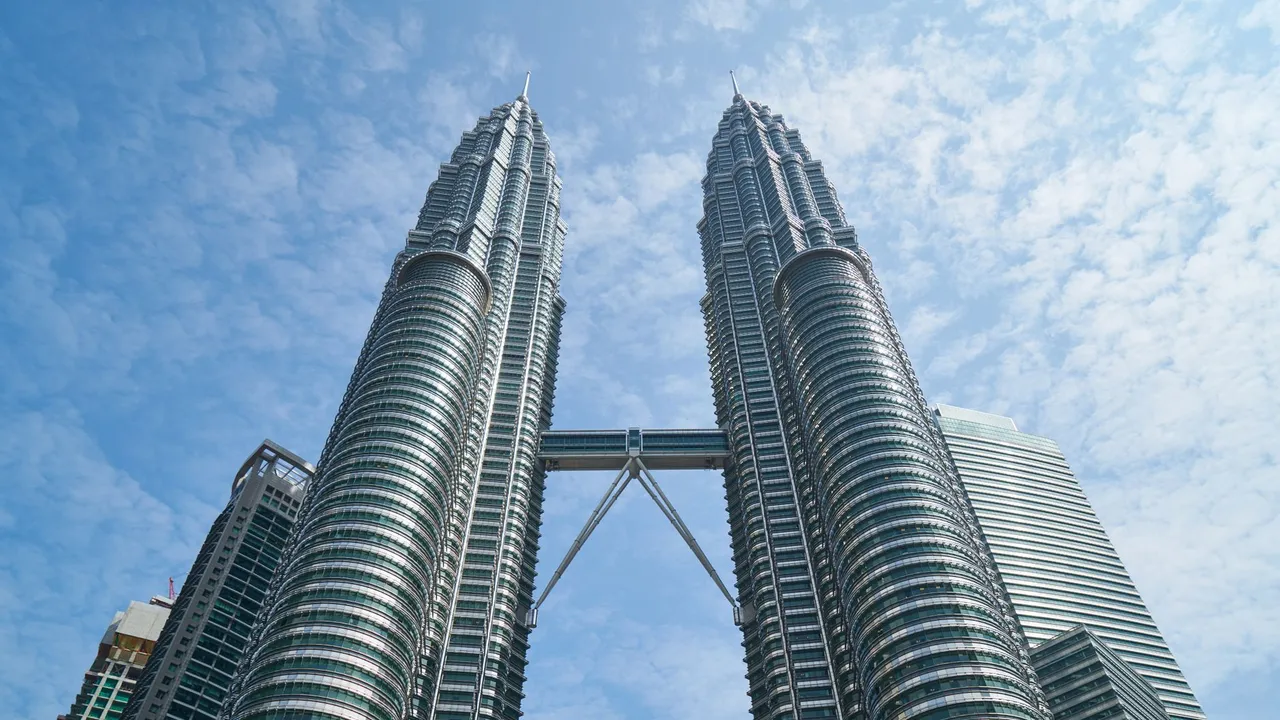
Start at Merdeka Square, where Malaysia's independence was declared, with the Moorish-style Sultan Abdul Samad Building on one side. Walk to Masjid Jamek at the confluence of the two rivers, then into Chinatown along Petaling Street and the Sri Mahamariamman Temple. In the evening, take the LRT to KLCC to see the Petronas Twin Towers lit up and the fountain show in the park below.
Signal 5G is widely available across central Kuala Lumpur on CelcomDigi and Maxis, and the LRT and MRT have coverage in most stations.
-
Day 2 Kuala Lumpur
Batu Caves and the Islamic Arts Museum
About 30 to 45 minutes by KTM Komuter from KL Sentral to Batu Caves.
Go early to Batu Caves by KTM Komuter train and climb the 272 coloured steps, watched by the giant golden statue of Lord Murugan, to the Hindu temple cave. Dress modestly and watch your belongings around the monkeys. Back in the city, visit the Islamic Arts Museum near the Perdana Botanical Garden, then walk the treetop canopy trail in the KL Forest Eco Park below the KL Tower.
Signal Good 4G and 5G at Batu Caves, though signal weakens deep inside the cave.
-
Day 3 Tanah Rata
Up to the Cameron Highlands
About four hours by express bus from Terminal Bersepadu Selatan in Kuala Lumpur.
Take a bus from Kuala Lumpur up the winding road to the Cameron Highlands, a former British hill station at about 1,500 m where days are noticeably cooler. Settle in at Tanah Rata, then visit a tea estate such as BOH Sungei Palas, where you can walk through the terraced plantation and watch tea being processed. Bring a light jacket for the evening.
Signal 4G is reliable on the expressway but drops on the mountain road up from Tapah. Good coverage returns in Tanah Rata and Brinchang.
-
Day 4 Tanah Rata
Mossy Forest and jungle trails
Join a morning guided trip to the Mossy Forest on the slopes of Gunung Brinchang, walking a boardwalk through cloud forest hung with moss and pitcher plants. Afterwards, browse the vegetable markets and strawberry farms around Brinchang. In the afternoon, walk one of the numbered jungle trails around Tanah Rata, checking locally which are open and safe, and avoid walking alone.
Signal Patchy in the Mossy Forest and on the jungle trails. Download an offline map and let your accommodation know which trail you are taking.
-
Day 5 George Town
Ipoh and on to George Town
About two hours by road from Tanah Rata to Ipoh, then about 1.5 hours by ETS train to Butterworth and a short ferry crossing to George Town.
Head down to Ipoh, a former tin-mining city ringed by limestone hills. Visit Kek Lok Tong, a Buddhist temple inside a cave with a garden behind it, then walk the old town's colonial streets and Concubine Lane, and try the city's famous white coffee and bean sprout chicken. In the afternoon, take the ETS train north to Butterworth and the ferry across to George Town.
Signal Good 4G and 5G in Ipoh and on the ETS line, with brief drops in the tunnels near Ipoh. Signal holds on the short ferry crossing.
-
Day 6 George Town
George Town's heritage core
George Town shares UNESCO World Heritage status with Melaka. Walk Armenian Street to see the street art and the Khoo Kongsi clan temple, then visit the Cheong Fatt Tze Mansion, the indigo-blue merchant's house. Explore the clan jetties on the waterfront, where families still live on stilt houses over the water. In the evening, eat at the hawker stalls around Gurney Drive or Chulia Street.
Signal Strong 5G across George Town. Grab works well here for short rides between sights.
-
Day 7 George Town
Penang Hill, Kek Lok Si and departure
Penang Hill and Kek Lok Si are about 30 minutes by road from George Town; the airport is about 30 minutes south.
Take the funicular up Penang Hill for views over George Town and both Penang bridges, and walk The Habitat's canopy trail at the top. On the way down, visit Kek Lok Si in Air Itam, one of the largest Buddhist temple complexes in South East Asia, with its seven-tiered pagoda. Fly out from Penang International Airport, or take the train back to Kuala Lumpur.
Signal Good 4G and 5G at the funicular stations and on the summit; the forest trails at The Habitat may weaken it.
Staying connected on this route
- File your Malaysia Digital Arrival Card online before flying; airlines may ask to see it at check-in.
- Install Grab before you land; it is the easiest way to book rides in Kuala Lumpur and George Town.
- Download offline maps for the Cameron Highlands, where signal is patchy on the mountain road and forest trails.
Itinerary sources · 4
- whc.unesco.org UNESCO: Melaka and George Town, Historic Cities of the Straits of Malacca
- ktmb.com.my KTMB: ETS services
- penanghill.gov.my Penang Hill Corporation
- gov.uk GOV.UK foreign travel advice: Malaysia
Information and verification
Each block below says what was checked and when. Anything we cannot date, we do not claim.
- Prices and plans
- Every price and allowance on this page is read from the live catalog, not typed in.
- Host networks
- The operator list comes from the network partner that carries this eSIM.
Transparent pricing
Malaysia eSIM prices
| Data | Price | Per day |
|---|---|---|
| Unlimited | $8.00 | $2.67/day |
| Data | Price | Per day |
|---|---|---|
| Unlimited | $12.99 | $2.60/day |
| Data | Price | Per day |
|---|---|---|
| Unlimited | $22.99 | $2.30/day |
| Data | Price | Per day |
|---|---|---|
| Unlimited | $124.99 | $2.08/day |
| Data | Price | Per day |
|---|---|---|
| Unlimited | $189.99 | $2.11/day |
Going to more than one country?
Regional plans that also cover Malaysia
Destinations
Popular eSIM destinations
Travel guides
Read before you go


