










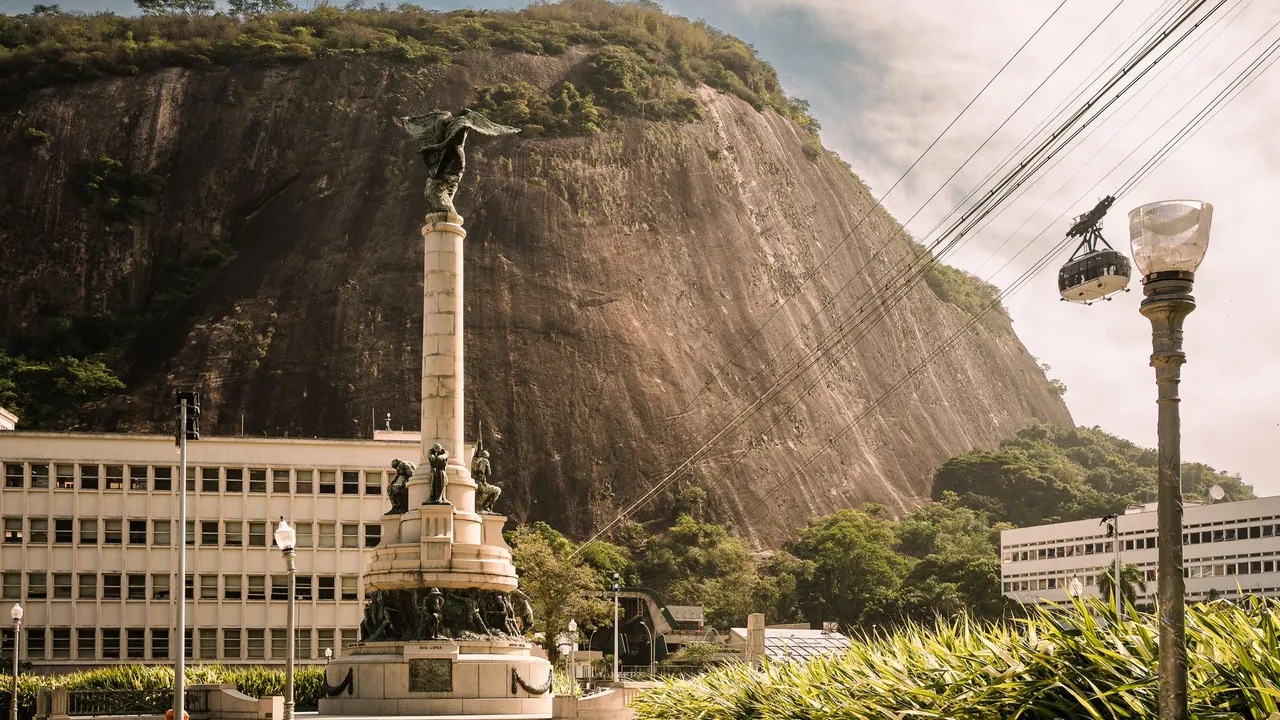
eSIM for Brazil 
Viasimo's Brazil eSIM starts at $1.29 for 100 MB over 7 days, running on Claro, TIM, and Vivo with 5G where available. Plans last 1 to 180 days, arrive by email in minutes and install from your phone's settings, with no app.
Works everywhere in Brazil
- Acre
- Alagoas
- Amapá
- Amazonas
- Bahia
- Boa Vista
- Ceará
Select your planIn stock
Duration
Quantity
1
Unlimited data · 3 Days$14.99







Unlimited data · 3 Days ×1
$14.99
Does my phone take an eSIM? Check now
Dial *#06# on your phone. If you see an EID number, your phone takes an eSIM. Most phones sold since 2019 do.
Not sure it works on your phone? Check compatibilityWhich networks does the Brazil eSIM use?
Host networks: Claro / TIM / Vivo
Your eSIM picks one automatically; you do not choose or switch between them.
- Data
- 100 MB – 50 GB or unlimited
- Validity
- 1–180 days
- Speed
- 4G LTE / 5G
- Hotspot / tethering
- Supported on most devices
- Activation
- Automatic on arrival
- Speed management
- Roughly 2-3 GB per day at full speed, sometimes less depending on the local carrier, then reduced
- Top-ups
- Add more data from your account, before the plan expires
- Text messages (SMS)
- Data only: use an app for verification codes
- Connects via
- Brazil
- Unused validity
- 180 days before it must be installed
How much data do you need?
The allowances below are our sizing recommendations, not measurements. The plan beside each one is the cheapest option on this page that covers it.
| You are | Plan for | Cheapest plan that covers it |
|---|---|---|
| LightMaps, messaging and the occasional lookup | About 1 GB a week | $2.791 GB, 7 days |
| TypicalMaps, social, photos and some browsing | About 3 to 7 GB a week | $11.995 GB, 30 days |
| HeavyVideo streaming, video calls and uploads | 10 GB a week or more | $19.9910 GB, 30 days |
| Working or sharingTethering a laptop, calls and cloud sync | 20 GB a week or more | $31.99Unlimited, 7 days |
eSIM, local SIM or roaming?
Charged per day
Your carrier roaming
Queue and plastic
A SIM at the airport
$1.29
Viasimo, one bundle
Only the Viasimo figure is a price: it comes from today’s live catalog. The other two rows are directional, not quoted rates.
Important to know
- This is a data-only eSIM. It carries no calls or SMS on its own number.
- Your existing number stays on your primary SIM, so calls and verification texts keep working.
- Your phone must support eSIM, and some carrier-locked phones cannot install one.
- Signal varies with location, terrain, congestion and your handset. Dense urban areas are consistently better served than remote ones.
- 5G only works where the host network has deployed it and your phone supports it. Everywhere else it falls back to 4G LTE.
- The eSIM selects a host network automatically. You cannot pick or switch between them.
- Unlimited plans run at full speed up to a fair-use limit, then continue at a reduced speed. Read the fair usage policy
Frequently asked questions
Does an eSIM work in Brazil?
Yes. Your Brazil eSIM connects automatically the moment you arrive, with no roaming fees and nothing to set up at the airport. The host networks it can use are Claro, TIM, Vivo. Coverage runs on 4G LTE and 5G where the network has rolled it out, and falls back to 4G elsewhere.
Do I get 5G in Brazil?
Yes, where it has been deployed. 5G runs on Claro, TIM, Vivo in Brazil, and your eSIM uses it automatically on a 5G-capable phone, dropping back to 4G LTE outside covered areas. No country is covered everywhere, so 5G availability varies by location.
Do I need a CPF to get mobile data in Brazil?
For a normal prepaid SIM bought in a Brazilian shop, usually yes: registration asks for a CPF taxpayer number. Vivo, Claro and TIM each sell tourist products that accept a passport, but they can require a foreign card with 3-D Secure, an address in Brazil or activation in Portuguese. An eSIM installed before you travel skips local registration altogether.
Which Brazilian network has the most 5G?
In Opensignal's January 2026 report, TIM users were connected to 5G about 68% of the time, Vivo users about 65% and Claro users about 23%. Vivo recorded the fastest 5G downloads at roughly 336 Mbps. All three operators offer 5G in every state capital, and your eSIM can connect to any of them.
Can tourists pay with Pix in Brazil?
Mostly not yet. Pix normally needs a Brazilian bank account, and the schemes that let foreign visitors pay by Pix from their own wallets or banking apps are still limited. Cards and phone wallets are accepted at most hotels, restaurants and shops. If a vendor shows only a Pix QR code, ask whether they also take card.
Is it safe to use my phone on the street in Rio or São Paulo?
It's best avoided. The UK Foreign Office says thieves in Brazilian cities target mobile phones, especially between 4pm and 9pm, and on buses. It advises not using your phone in the street or displaying it on the metro. Check maps indoors, keep your phone out of sight in cars, and never resist a robbery.
Will I have signal in the Pantanal or the Amazon?
Don't count on it. Coverage in Brazil thins quickly outside populated areas, and long stretches of highway and the rural interior drop to 3G or no signal at all. Lodges in the Pantanal and on Amazon rivers often rely on their own wifi. Download offline maps, tickets and reservations before you leave the last town.
How much data do I need for 7 days in Brazil?
For 7 days in Brazil, Viasimo sells 100 MB for $1.29, 1 GB for $2.79, and unlimited data for $31.99. Our sizing recommendation, not a measurement: maps, messaging and the occasional lookup, about 1 GB a week; maps, social, photos and some browsing, about 3 to 7 GB a week. The data calculator on this site works it out from how you actually use your phone.
Installing, keeping your number, topping up and hotspot work the same everywhere: see how it works →
Brazil: what to know before you land
Your eSIM in Brazil can use Vivo, Claro or TIM, and all three run 5G in every state capital. The more pressing issues for visitors are practical: ordinary prepaid SIMs ask for a Brazilian CPF tax number, Pix payments mostly need a local bank account, and phone theft in the big cities is common enough that the UK government warns about it directly.
- Emergency
-
- 190 police
- 192 ambulance
- 193 fire
- Plugs
- CN 127V or 220V depending on the city
- Currency
- Brazilian real (BRL)
Main airports
- GRU São Paulo/Guarulhos International Airport
- GIG Rio de Janeiro/Galeão International Airport
Apps worth having WhatsAppUber99iFoodGoogle Maps
Vivo, TIM and Claro in Opensignal's 2026 Brazil report
Brazil's three national operators have each pulled ahead on something different. In Opensignal's January 2026 report, covering October to December 2025:
- Vivo, the largest operator, had the fastest overall download speed at about 51 Mbps and the fastest 5G at around 336 Mbps.
- TIM spent the most time on 5G, with users connected to it about 68% of the time, and won the reliability and consistent quality measures.
- Claro was close on speed at about 50 Mbps, but its users were on 5G only around 23% of the time.
The practical message is that 5G in Brazil is concentrated in the cities. All three operators have it in every state capital, and once you leave the populated corridors you'll mostly be on 4G, then 3G, then nothing on long stretches of highway and in the interior. Independent reporting describes TIM as strong in urban areas but thinner in the countryside.
Because your eSIM can use all three networks, you're not tied to one operator's weak spots. If the signal fades on a road trip, toggling airplane mode can prompt the phone to try a different network.
Using your phone safely in São Paulo and Rio de Janeiro
The UK Foreign Office's advice for Brazil is blunt: robberies are common in many cities, especially on buses, and thieves particularly target mobile phones between about 4pm and 9pm. It advises against using your phone in the street or displaying it on trains and the metro, and says not to resist if you're threatened.
A few habits make a real difference:
- Step into a shop or café to check directions rather than walking along staring at a map.
- Keep a second payment card and your passport details somewhere other than your phone.
- When you order an Uber or 99 car, wait indoors, check the registration and driver details match the app, and use the app's trip sharing. The Foreign Office warns that fraudulent ride-hailing accounts have been linked to crimes.
- Don't hail taxis in the street. At the airports, including São Paulo Guarulhos (GRU) and Rio Galeão (GIG), use the authorised taxi booths or a ride-hailing pick-up point.
The Foreign Office also flags dating apps being used to target foreign visitors for robbery and bank fraud, so be cautious about meeting strangers you've only spoken to online.
CPF numbers, tourist SIMs and why Pix is tricky for visitors
Brazil requires mobile lines to be registered, and a standard prepaid chip bought from a shop asks for a CPF, the Brazilian taxpayer number, which most visitors don't have. Each operator now offers a dedicated tourist product that accepts a passport instead, but these come with their own hoops, such as a foreign card with 3-D Secure, a Brazilian address for registration, or activation menus in Portuguese. Installing an eSIM at home avoids that process entirely.
The CPF also matters for payments. Pix, the instant transfer system run by Brazil's central bank, is how many Brazilians pay for everything from beach snacks to market stalls, but it normally requires a Brazilian bank account. Payment companies are working on ways for foreign visitors to pay by Pix from their own wallets or banking apps, but availability is still limited, so don't count on it.
For most trips, a contactless card or phone wallet will cover hotels, restaurants and shops, with a little cash for small vendors. If a stall only shows a Pix QR code, ask whether they take card, as many sellers carry a card machine too.
Researched October 2026 · 5 sources
- insights.opensignal.com Brazil Mobile Network Experience Report, January 2026 – Opensignal
- gov.uk Brazil travel advice: safety and security – GOV.UK
- riotimesonline.com Internet and SIM cards in Brazil 2026 – The Rio Times
- pagbrasil.com Pix for foreigners in Brazil – PagBrasil
- worldstandards.eu Plug, socket & voltage by country – WorldStandards
Seven days in Brazil: Rio de Janeiro, Iguaçu Falls and São Paulo
A first-time week built around two domestic flights: three days of Rio's mountains, beaches and old centre, two days at Iguaçu Falls on the Argentine border, and a final two days of museums, food and street art in São Paulo.
When to go April to June and August to October are the best balance; December to March is hot, humid and the peak of heavy rain in the south-east, and Iguaçu's flow is strongest in the wetter months.
-
Day 1 Rio de Janeiro
Rio: Sugarloaf and Copacabana
Use an authorised airport taxi or an app car booked from inside the terminal; the ride to the South Zone takes 45–60 minutes depending on traffic.
After landing at Galeão, settle in around Copacabana or Ipanema. In the late afternoon take the two-stage cable car from Urca up Morro da Urca and on to the top of Sugarloaf Mountain for sunset over Guanabara Bay. Return along the Copacabana promenade, with its wave-pattern mosaic pavement, while it is still light: the Foreign Office advises against visiting city beaches after dark.
Signal Vivo, Claro and TIM all offer 5G in Rio, and you will usually connect quickly at the airport. Keep your phone out of sight in the street, especially from late afternoon.
-
Day 2 Rio de Janeiro
Rio: Christ the Redeemer and Tijuca
Corcovado trains leave from Cosme Velho station; buy timed tickets in advance.
Take the cog railway from Cosme Velho up Corcovado to the Christ the Redeemer statue early, before cloud and crowds build. Afterwards visit the Jardim Botânico, with its avenue of royal palms, then walk Ipanema beach towards Arpoador rock for the late-afternoon view along the coast. Tijuca National Park's forest roads link these areas; go with a guide if you want to hike its trails.
Signal Good 4G and often 5G at the statue and in the South Zone. Inside Tijuca forest, signal is patchy, so share your plans before walking any trail.
-
Day 3 Rio de Janeiro
Rio: historic centre and Santa Teresa
Use the metro or VLT light rail to reach the centre from the South Zone.
Spend the morning in the old centre around Praça XV and the Paço Imperial, then see the Theatro Municipal and the Real Gabinete Português de Leitura reading room. Walk to the Museum of Tomorrow on Praça Mauá and the street murals along the port's Boulevard Olímpico. In the afternoon ride the Santa Teresa tram over the Lapa Arches to the hilltop Santa Teresa district, then descend via the tiled Selarón Steps.
Signal Strong 5G downtown; the metro has signal in many stations but not always between them. Check your GPS route avoids favelas, as the Foreign Office advises.
-
Day 4 Foz do Iguaçu
Fly to Iguaçu Falls
Direct flights from Rio take around 2 hours; the park is about 20 minutes by road from Foz do Iguaçu airport.
Take a morning flight to Foz do Iguaçu. In the afternoon visit the Brazilian side of Iguaçu National Park, a UNESCO World Heritage site. A park bus takes you from the visitor centre to the start of the 1.5 km Falls Trail, which runs past a series of lookouts to a walkway out over the river below the Devil's Throat. Check closing times, as the park shuts at 4pm.
Signal 4G is generally available in Foz do Iguaçu and around the park's visitor areas, but expect weaker signal on the forest trails and in the spray near the falls. Protect your phone from the water.
-
Day 5 Foz do Iguaçu
Iguaçu: falls trails and birds
Local buses and taxis link Foz do Iguaçu with the park. The Argentine park is across the Tancredo Neves bridge.
Return to the park early for the morning light, or walk or cycle one of the quieter trails such as the Poço Preto path through Atlantic Forest, which has set hiking hours. In the afternoon visit Parque das Aves near the park entrance, which focuses on Atlantic Forest birds. With a passport and time to spare you can instead cross to the Argentine side, where catwalks reach the top of the Devil's Throat.
Signal Your Brazil eSIM will not work in Argentina, so download maps and tickets before crossing the border. On the Brazilian side, coverage near the visitor centre is usable.
-
Day 6 São Paulo
São Paulo: Avenida Paulista and Ibirapuera
Flights from Foz do Iguaçu to São Paulo take about 1 hour 40 minutes.
Fly to São Paulo and head for Avenida Paulista. Visit MASP, the art museum raised on red pillars over an open plaza, then walk the avenue and on to Ibirapuera Park, where Oscar Niemeyer's buildings house the Afro Brasil Museum and the Museum of Modern Art. In the evening walk through the painted alleys of Beco do Batman in Vila Madalena.
Signal São Paulo has dense 5G coverage on all three networks. As in Rio, the Foreign Office warns that phones are targeted, so step into a café to check your route.
-
Day 7 São Paulo
São Paulo: the old centre and departure
Guarulhos is 45 minutes to 2 hours by road from the centre depending on traffic; airport express buses and a train link also run.
Explore the city centre by daylight. Start at the Mercado Municipal, known for its stained-glass windows and food stalls, then walk to the São Bento Monastery and the Sé Cathedral. Finish at the Pinacoteca, the state art museum, beside Luz station and the Jardim da Luz. Leave plenty of time for traffic if your flight leaves from Guarulhos.
Signal Strong 5G across the centre and at Guarulhos. Keep your phone away from the kerb and out of view in the busy streets around the Sé.
Staying connected on this route
- Install and activate your eSIM before you fly: local prepaid SIMs usually require a CPF tax number.
- Download offline maps of Rio, Tijuca and Iguaçu; signal fades in forest areas and near the falls.
- Your eSIM is for Brazil only, so it will not connect on the Argentine side of Iguazú.
- Book Uber or 99 rides from inside a building and check the car's plate before getting in.
Itinerary sources · 4
- gov.uk Brazil travel advice: safety and security – GOV.UK
- cataratasdoiguacu.com.br Parque Nacional do Iguaçu – official site
- whc.unesco.org Iguaçu National Park – UNESCO World Heritage Centre
- insights.opensignal.com Brazil Mobile Network Experience Report, January 2026 – Opensignal
Information and verification
Each block below says what was checked and when. Anything we cannot date, we do not claim.
- Prices and plans
- Every price and allowance on this page is read from the live catalog, not typed in.
- Host networks
- The operator list comes from the network partner that carries this eSIM.
Transparent pricing
Brazil eSIM prices
| Data | Price | Per day |
|---|---|---|
| Unlimited | $14.99 | $5.00/day |
| Data | Price | Per day |
|---|---|---|
| Unlimited | $22.99 | $4.60/day |
| Data | Price | Per day |
|---|---|---|
| 100 MBBest value | $1.29 | $0.18/day |
| 1 GB | $2.79 | $0.40/day |
| Unlimited | $31.99 | $4.57/day |
| Data | Price | Per day |
|---|---|---|
| Unlimited | $44.99 | $4.50/day |
| Data | Price | Per day |
|---|---|---|
| Unlimited | $239.99 | $4.00/day |
| Data | Price | Per day |
|---|---|---|
| Unlimited | $359.99 | $4.00/day |
| Data | Price | Per day |
|---|---|---|
| Unlimited | $719.99 | $4.00/day |
Going to more than one country?
Regional plans that also cover Brazil
Destinations
Popular eSIM destinations
Travel guides
Read before you go


Jul 31, 2026 | 7 minute read
