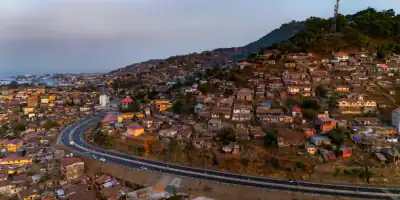
eSIM for Guinea 
Viasimo's Guinea eSIM starts at $8.00 for 1 GB over 7 days, running on Orange with 4G LTE where available. Plans last 1 to 180 days, arrive by email in minutes and install from your phone's settings, with no app.
Works everywhere in Guinea
- Boké Region
- Conakry
- Faranah
- Kankan Region
- Kindia
- Labé Region
- Mamou Region
Duration


Unlimited data · 3 Days ×1
$42.00
Does my phone take an eSIM? Check now
Dial *#06# on your phone. If you see an EID number, your phone takes an eSIM. Most phones sold since 2019 do.
Not sure it works on your phone? Check compatibilityWhich networks does the Guinea eSIM use?
Host networks: Orange
Your eSIM picks one automatically; you do not choose or switch between them.
- Data
- 1 GB – 20 GB or unlimited
- Validity
- 1–180 days
- Speed
- 4G LTE
- Hotspot / tethering
- Supported on most devices
- Activation
- Starts when you first connect in your destination
- Speed management
- Roughly 2-3 GB per day at full speed, sometimes less depending on the local carrier, then reduced
- Top-ups
- Add more data from your account, before the plan expires
- Text messages (SMS)
- Data only: use an app for verification codes
- Connects via
- United States
- Unused validity
- 180 days before it must be installed
How much data do you need?
The allowances below are our sizing recommendations, not measurements. The plan beside each one is the cheapest option on this page that covers it.
| You are | Plan for | Cheapest plan that covers it |
|---|---|---|
| LightMaps, messaging and the occasional lookup | About 1 GB a week | $8.001 GB, 7 days |
| TypicalMaps, social, photos and some browsing | About 3 to 7 GB a week | $33.005 GB, 30 days |
| HeavyVideo streaming, video calls and uploads | 10 GB a week or more | $64.9910 GB, 30 days |
| Working or sharingTethering a laptop, calls and cloud sync | 20 GB a week or more | $93.00Unlimited, 7 days |
eSIM, local SIM or roaming?
Charged per day
Your carrier roaming
Queue and plastic
A SIM at the airport
$8.00
Viasimo, one bundle
Only the Viasimo figure is a price: it comes from today’s live catalog. The other two rows are directional, not quoted rates.
Important to know
- This is a data-only eSIM. It carries no calls or SMS on its own number.
- Your existing number stays on your primary SIM, so calls and verification texts keep working.
- Your phone must support eSIM, and some carrier-locked phones cannot install one.
- Signal varies with location, terrain, congestion and your handset. Dense urban areas are consistently better served than remote ones.
- The eSIM selects a host network automatically. You cannot pick or switch between them.
- Unlimited plans run at full speed up to a fair-use limit, then continue at a reduced speed. Read the fair usage policy
Frequently asked questions
Does an eSIM work in Guinea?
Yes. Your Guinea eSIM connects automatically the moment you arrive, with no roaming fees and nothing to set up at the airport. The host networks it can use are Orange. Coverage runs on 4G LTE. There is no 5G on our host network in Guinea yet.
Do I get 5G in Guinea?
No. Orange do not yet offer 5G to visitors in Guinea, so your eSIM connects over 4G LTE or slower. Anyone claiming 5G for this destination is quoting a spec sheet, not the network you will actually get.
Is there an emergency number in Guinea?
The UK Foreign Office says there are no public emergency services in Guinea. For urgent medical help it lists private clinics in Conakry, including Clinique Pasteur and Clinique Ambroise Paré. Save these, your embassy's emergency line and your insurer's assistance number before you fly. Our eSIM is data only, so keep your home SIM active for voice calls.
Can I take photos with my phone in Conakry?
With care. Photography is highly restricted near military bases, checkpoints, the presidential residence, police and gendarmerie headquarters, airports and bridges, and taking photos of these or other government buildings can lead to arrest. That includes casual phone snaps from a vehicle. Always ask before photographing people, and keep your phone out of sight in busy streets.
Do I need an e-visa to enter Guinea?
Most visitors need a visa. For private and business travel, you apply online in advance on Guinea's e-visa portal, uploading scanned documents and a yellow fever certificate if required. On arrival at Conakry you show the e-visa registration receipt and the visa is issued at the border. Save the receipt offline and on paper.
Which airlines fly to Conakry from Europe?
Air France flies from Paris Charles de Gaulle, Brussels Airlines from Brussels and Turkish Airlines from Istanbul to Ahmed Sékou Touré International Airport (CKY), also known as Gbessia. Passengers on these flights are usually bused between the aircraft and the terminal. Have your eSIM installed before you leave so you can contact your driver as soon as you land.
How much data do I need for 7 days in Guinea?
For 7 days in Guinea, Viasimo sells 1 GB for $8.00 and unlimited data for $93.00. Our sizing recommendation, not a measurement: maps, messaging and the occasional lookup, about 1 GB a week; maps, social, photos and some browsing, about 3 to 7 GB a week. The data calculator on this site works it out from how you actually use your phone.
Installing, keeping your number, topping up and hotspot work the same everywhere: see how it works →
Guinea: what to know before you land
In Guinea our eSIM connects to Orange over 4G/LTE, and you land at Conakry's Gbessia airport (CKY) on the Kaloum peninsula. Before you go, know this: the UK government says Guinea has no public emergency services, so the most useful numbers to save are private clinics, your embassy and whoever is collecting you from the airport.
- Emergency
- No public emergency service; save private clinic and embassy numbers
- Plugs
- CFK 220V
- Currency
- Guinean franc (GNF)
Main airports
- CKY Ahmed Sékou Touré International Airport (Gbessia), Conakry
Arriving at Gbessia, Conakry's Ahmed Sékou Touré airport (CKY)
Conakry's international airport, officially Ahmed Sékou Touré International and widely called Gbessia, sits on the south shore of the Kaloum peninsula, a few kilometres from the downtown tip. Direct flights from Europe come from Paris with Air France, Brussels with Brussels Airlines and Istanbul with Turkish Airlines, and passengers on these flights are usually bused between the aircraft and the terminal.
Most visitors need a visa. For private and business trips you apply online in advance through Guinea's e-visa portal, uploading scanned documents and a yellow fever certificate if you arrive from a risk country. You then show the e-visa registration receipt at the border, where the visa is issued. Keep that receipt as a saved file and a printout, as you may not have a signal or wifi in the immigration queue.
The UK Foreign Office advises arranging your airport transfer in advance if you land after dark. Turn on mobile data as soon as you are off the plane so you can confirm with your driver, share your location and tell your host you have arrived.
No national emergency line: the numbers to save before you land
One fact sets Guinea apart from most destinations. According to the UK Foreign Office, there are no public emergency services in Guinea, so there is no reliable number to call for an ambulance. Instead, the Foreign Office lists private clinics in Conakry for urgent medical help, including Clinique Pasteur and Clinique Ambroise Paré.
Before you travel, save these in your phone and on paper:
- The numbers of at least two Conakry clinics, from your embassy's latest advice.
- Your embassy or consulate's emergency line. For British nationals, the FCDO lists a dedicated consular number.
- Your travel insurer's 24-hour assistance line, including medical evacuation.
- Your host, employer or tour operator in Guinea, plus your driver.
Because our eSIM is data only, you cannot make normal phone calls on it, but you can still message and make app-based calls on WhatsApp over data. Keep your home SIM active for voice calls and texts, and check with your insurer in advance whether they can be reached by WhatsApp.
Phones, checkpoints and photography on Guinea's roads
Using your phone in Guinea needs some care. The Foreign Office reports high levels of street crime in Conakry, including mugging, pickpocketing and bag snatching, and advises keeping mobiles out of sight and not walking alone at night. Use a pre-arranged taxi when visiting a bank or changing money, and avoid moto-taxis, shared taxis and tuk-tuks.
Photography is tightly restricted. Taking pictures near military bases, checkpoints, the presidential residence, police and gendarmerie buildings, airports and bridges can lead to arrest, and that includes a quick snap on your phone from a car window. Ask before photographing people.
On the road, police and local militia run frequent checkpoints, where documents and luggage are inspected. The Foreign Office warns of armed robberies and carjackings, especially at night, on routes towards Mamou, Faranah, Kissidougou, Guéckédou, Macenta and N'zérékoré. The rainy season, from May to October, can flood roads and make them impassable, and fuel is not always available. Share your route and expected arrival time with someone before each long leg, as mobile coverage between towns is limited.
Researched October 2026 · 4 sources
Seven days in Guinea: Conakry, the Îles de Los and the Fouta Djallon
An adventurous week for travellers using a reputable local operator and driver: Conakry and the beaches of the Îles de Los, then inland in daylight to the Kindia waterfalls and the cool Fouta Djallon highlands around Dalaba and Pita.
When to go The dry season from November to April is the only practical time to travel inland, as the July to September rains are among the heaviest in West Africa and turn roads to mud; waterfalls are fullest just after the rains, in October and November.
-
Day 1 Conakry
Conakry: Kaloum and the National Museum
Gbessia (Ahmed Sékou Touré) airport is on the Kaloum peninsula, a short drive from downtown; arrange your transfer in advance.
Your pre-arranged driver meets you at Gbessia airport. After settling in, visit the National Museum at Sandervalia in the Kaloum district, which holds masks, carvings and instruments from Guinea's regions. Then see the exterior of the Grand Mosque of Conakry, one of the largest in West Africa, and the gardens around it. Keep the evening quiet, avoiding walking around after dark.
Signal Orange 4G works across Conakry and at the airport. Do not photograph government buildings, police or military sites, even casually from the car.
-
Day 2 Conakry
Boat to the Îles de Los
Boats from Kaloum's port take roughly 30 to 45 minutes; check the boat's safety equipment and avoid overloaded vessels.
Take a boat from Kaloum out to the Îles de Los, an archipelago just off the coast. Spend the day on Roume or Kassa, swimming from sandy beaches backed by forest. On Kassa, ask about the remains of the old British trading post that operated there in the 18th century, when the islands were part of the Atlantic slave trade. Return to Conakry by mid-afternoon before the sea gets rough.
Signal Coverage from the mainland reaches parts of Kassa and Roume, but it is weak and can vanish on the far beaches and during the crossing.
-
Day 3 Kindia
Kindia and the Voile de la Mariée falls
Conakry to Kindia by road, about 135 km; allow 3 to 4 hours because of the traffic out of the capital and checkpoints. Travel only in daylight.
Leave Conakry early to beat the traffic and drive inland to Kindia, a market town at the foot of the hills. In the afternoon visit the Voile de la Mariée, the 'Bride's Veil', a waterfall that spills down a rock face in a fine, wide curtain, with a pool below. Walk around Kindia's market and its fruit stalls before nightfall.
Signal Orange coverage is reasonable along much of the N1 and in Kindia town, but weak or absent at the falls. Message your contacts before leaving town.
-
Day 4 Dalaba
Through Mamou to Dalaba
Kindia to Dalaba via Mamou, about 4 to 5 hours by road. The FCDO notes occasional hold-ups on the Mamou route, so travel in daylight, ideally in convoy, and take security advice from your operator.
Continue into the Fouta Djallon plateau via Mamou to Dalaba, Guinea's highest town and a former colonial hill station, noticeably cooler than the coast. In the afternoon visit the round house once lived in by the South African singer Miriam Makeba, built in the style of a traditional Fula home, and walk through the old Chevalier pine arboretum, where early 20th-century foresters planted trials of imported trees.
Signal Expect gaps between towns, especially on the climb into the highlands; Mamou and Dalaba have Orange 4G but it can be slow.
-
Day 5 Dalaba
Pita and the Kambadaga Falls
Dalaba to Pita is roughly 1 hour to 1 hour 30 minutes by road, with the falls a further drive from town on a rougher track.
Drive north to Pita and on to the Kambadaga Falls, where the Kokoulo river drops over a series of rock steps into a wooded gorge; they are most powerful just after the rainy season. With a local guide, walk down towards the lower viewpoints. Return to Dalaba via the hillside villages, stopping to see the Fula farms on the plateau.
Signal There is usually no signal at the falls or on the track to them. Pita town has basic Orange coverage, enough for messages.
-
Day 6 Conakry
Long drive back to Conakry
Dalaba to Conakry by road, roughly 280 km; allow 7 to 8 hours with stops and checkpoints.
Leave Dalaba at first light for the long return to the coast, aiming to reach Conakry well before dark, as embassy staff avoid road travel outside the Conakry region at night. Break the journey for lunch in Mamou or Kindia. If you arrive with time to spare, buy fabrics or crafts at Conakry's Marché Madina with your driver or guide, keeping your phone out of sight.
Signal Patchy on the plateau and between towns, steadier around Kindia and on the approach to Conakry. Share your live location with your contacts for the journey.
-
Day 7 Conakry
Conakry waterfront and departure
Arrange your airport transfer in advance; the airport is close to the centre, but traffic can be heavy.
Spend a relaxed final morning in Conakry. Visit the Botanical Garden in Camayenne, laid out in colonial times, or take a short boat ride out to Île de Corail or one of the nearer islets if the sea is calm. Pack, confirm your flight, and head to Gbessia airport with plenty of time for the checks there.
Signal Reliable Orange 4G in central Conakry and at the airport, enough to check in online and confirm your flight.
Staying connected on this route
- Emergency services in Guinea are very limited, so save private clinics in Conakry, your embassy and your insurer's assistance line in your phone and on paper before travelling inland.
- Download offline maps of the N1 from Conakry to Mamou and the Fouta Djallon before leaving the capital.
- Never photograph checkpoints, bridges or official buildings, even from a moving car; it can lead to arrest.
Itinerary sources · 3
- gov.uk GOV.UK foreign travel advice: Guinea, safety and security
- en.wikipedia.org Dalaba (Wikipedia)
- en.wikipedia.org Îles de Los (Wikipedia)
Information and verification
Each block below says what was checked and when. Anything we cannot date, we do not claim.
- Prices and plans
- Every price and allowance on this page is read from the live catalog, not typed in.
- Host networks
- The operator list comes from the network partner that carries this eSIM.
Guinea eSIM prices
| Data | Price | Per day |
|---|---|---|
| 2 GB | $16.00 | $16.00/day |
| Data | Price | Per day |
|---|---|---|
| Unlimited | $42.00 | $14.00/day |
| Data | Price | Per day |
|---|---|---|
| Unlimited | $67.00 | $13.40/day |
| Data | Price | Per day |
|---|---|---|
| Unlimited | $134.99 | $13.50/day |
| Data | Price | Per day |
|---|---|---|
| 3 GBBest value | $21.99 | $0.73/day |
| 5 GB | $33.00 | $1.10/day |
| 10 GB | $64.99 | $2.17/day |
| 20 GB | $124.99 | $4.17/day |
| Unlimited | $354.99 | $11.83/day |
| Data | Price | Per day |
|---|---|---|
| Unlimited | $704.99 | $11.75/day |
| Data | Price | Per day |
|---|---|---|
| Unlimited | $1,059.99 | $11.78/day |
| Data | Price | Per day |
|---|---|---|
| Unlimited | $2,114.99 | $11.75/day |
Destinations