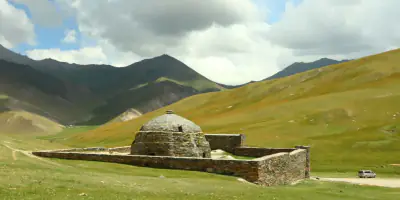
eSIM for Tajikistan 
Viasimo's Tajikistan eSIM starts at $2.79 for 500 MB over 1 day, running on MegaFon and ZET with 5G where available. Plans last 1 to 180 days, arrive by email in minutes and install from your phone's settings, with no app.
Works everywhere in Tajikistan
- Dushanbe
- Gorno-Badakhshan
- Khatlon Province
- Republican Subordination
- Sughd
Duration


Unlimited data · 3 Days ×1
$19.99
Does my phone take an eSIM? Check now
Dial *#06# on your phone. If you see an EID number, your phone takes an eSIM. Most phones sold since 2019 do.
Not sure it works on your phone? Check compatibilityWhich networks does the Tajikistan eSIM use?
Host networks: MegaFon / ZET
Your eSIM picks one automatically; you do not choose or switch between them.
- Data
- 500 MB – 20 GB or unlimited
- Validity
- 1–180 days
- Speed
- 4G LTE / 5G
- Hotspot / tethering
- Supported on most devices
- Activation
- Starts when you first connect in your destination
- Speed management
- Roughly 2-3 GB per day at full speed, sometimes less depending on the local carrier, then reduced
- Top-ups
- Add more data from your account, before the plan expires
- Text messages (SMS)
- Data only: use an app for verification codes
- Connects via
- United Kingdom
- Unused validity
- 180 days before it must be installed
How much data do you need?
The allowances below are our sizing recommendations, not measurements. The plan beside each one is the cheapest option on this page that covers it.
| You are | Plan for | Cheapest plan that covers it |
|---|---|---|
| LightMaps, messaging and the occasional lookup | About 1 GB a week | $3.791 GB, 7 days |
| TypicalMaps, social, photos and some browsing | About 3 to 7 GB a week | $16.005 GB, 30 days |
| HeavyVideo streaming, video calls and uploads | 10 GB a week or more | $28.9910 GB, 30 days |
| Working or sharingTethering a laptop, calls and cloud sync | 20 GB a week or more | $43.99Unlimited, 7 days |
eSIM, local SIM or roaming?
Charged per day
Your carrier roaming
Queue and plastic
A SIM at the airport
$2.79
Viasimo, one bundle
Only the Viasimo figure is a price: it comes from today’s live catalog. The other two rows are directional, not quoted rates.
Important to know
- This is a data-only eSIM. It carries no calls or SMS on its own number.
- Your existing number stays on your primary SIM, so calls and verification texts keep working.
- Your phone must support eSIM, and some carrier-locked phones cannot install one.
- Signal varies with location, terrain, congestion and your handset. Dense urban areas are consistently better served than remote ones.
- 5G only works where the host network has deployed it and your phone supports it. Everywhere else it falls back to 4G LTE.
- The eSIM selects a host network automatically. You cannot pick or switch between them.
- Unlimited plans run at full speed up to a fair-use limit, then continue at a reduced speed. Read the fair usage policy
Frequently asked questions
Does an eSIM work in Tajikistan?
Yes. Your Tajikistan eSIM connects automatically the moment you arrive, with no roaming fees and nothing to set up at the airport. The host networks it can use are MegaFon, ZET. Coverage runs on 4G LTE and 5G where the network has rolled it out, and falls back to 4G elsewhere.
Do I get 5G in Tajikistan?
Yes, where it has been deployed. 5G runs on MegaFon, ZET in Tajikistan, and your eSIM uses it automatically on a 5G-capable phone, dropping back to 4G LTE outside covered areas. No country is covered everywhere, so 5G availability varies by location.
Do I need a permit for the Pamir Highway?
Yes. The Gorno-Badakhshan Autonomous Region (GBAO), which the Pamir Highway crosses, needs a separate travel permit on top of your visa. Apply through a Tajik embassy before travelling or through the Ministry of Foreign Affairs' Consular Department in Dushanbe. Permits can be suspended at short notice, so check before you go.
Is there phone signal on the Pamir Highway?
Only in some towns and villages. The UK Foreign Office says mobile coverage in remote areas of Tajikistan is extremely limited, and the highway is still not fully repaired after flooding. Download offline maps for the whole route, save your guesthouse contacts and tell someone your overnight stops before you set off.
Which mobile networks operate in Tajikistan?
The main operators include MegaFon, ZET, Tcell and Babilon Mobile. This eSIM uses MegaFon and ZET, on 4G and 5G where available. Tcell, owned by the Aga Khan Fund for Economic Development, switched on Dushanbe's first 5G masts in August 2020. Coverage on all networks thins sharply in the mountains.
Do I need to register with OVIR in Tajikistan?
If you enter without an e-visa and stay more than 10 days, you must register with OVIR at 5 Mirzo Tursunzoda Street in Dushanbe, and again if you change address. Hotels can no longer do it for you. Failing to register can stop you leaving and lead to fines or detention.
What are the emergency numbers in Tajikistan?
From a mobile, dial 101 for fire, 102 for police and 103 for an ambulance (01, 02 and 03 from a landline). Operators may not speak English, so keep a translation app ready. These are voice calls, and this eSIM is data only, so keep your home SIM switched on.
How much data do I need for 7 days in Tajikistan?
For 7 days in Tajikistan, Viasimo sells 1 GB for $3.79 and unlimited data for $43.99. Our sizing recommendation, not a measurement: maps, messaging and the occasional lookup, about 1 GB a week; maps, social, photos and some browsing, about 3 to 7 GB a week. The data calculator on this site works it out from how you actually use your phone.
Installing, keeping your number, topping up and hotspot work the same everywhere: see how it works →
Tajikistan: what to know before you land
In Tajikistan this eSIM uses MegaFon and ZET on 4G, with 5G where available. The country's other operators include Tcell, which switched on Dushanbe's first 5G masts in 2020, and Babilon. Paperwork matters as much as signal: the Pamir Highway needs a separate GBAO permit, and overstaying a visa can leave you stuck until you get an exit visa.
- Emergency
- 101 fire, 102 police, 103 ambulance (from a mobile)
- Plugs
- CF 220V
- Currency
- Tajikistani somoni (TJS)
Main airports
- DYU Dushanbe International Airport
- LBD Khujand Airport
MegaFon, ZET, Tcell and Babilon: Tajikistan's operators
Tajikistan has several mobile operators. This eSIM connects to MegaFon and ZET, choosing whichever has the stronger signal, on 4G LTE and 5G where it has been built. The other names you will see on shop signs are:
- Tcell, run by Indigo Tajikistan and owned by the Aga Khan Fund for Economic Development. It switched on its first 5G base stations in central Dushanbe on 6 August 2020.
- Babilon Mobile, a long-established operator that began as a US-Tajik joint venture.
In Dushanbe and Khujand all the networks offer usable mobile data. Away from the cities, the UK Foreign Office warns that mobile coverage in remote areas is extremely limited, which covers much of the Pamirs, the Fann Mountains and the border valleys. Having two networks on the eSIM helps in towns where only one operator has a mast, but it won't conjure signal in an empty mountain valley.
Local SIMs are sold in Dushanbe and need a passport to register. With the eSIM installed before you fly, you avoid that errand on arrival, often after a night flight, and keep your home SIM for calls and bank texts. Emergency staff may not speak English, so save key phrases in Russian or Tajik in a translation app for offline use.
The GBAO permit and the state of the Pamir Highway
To travel in the Gorno-Badakhshan Autonomous Region (GBAO), the eastern half of the country crossed by the Pamir Highway, you need a separate travel permit in addition to your visa. You can apply through a Tajik embassy before you travel, or from inside Tajikistan through the Consular Department of the Ministry of Foreign Affairs in Dushanbe. Permits are sometimes suspended at short notice for security reasons, so check before committing to a route. Keep a photo of the permit on your phone and the original with your passport; you will be asked for it at checkpoints.
The Foreign Office describes the Pamir Highway as open but not fully repaired after flooding. Conditions on the road:
- Some rural and mountain areas are reachable only by 4x4.
- Petrol stations are rare outside towns, and there are no breakdown services.
- In eastern Tajikistan, including GBAO, earthquake risk is particularly high, and quakes often trigger avalanches and landslides that block roads in spring and early summer.
Download offline maps for the whole route, save your driver's and guesthouses' numbers, and tell someone your planned overnight stops, because you will spend long stretches without signal.
E-visas, OVIR registration and exit visas
Most visitors use Tajikistan's e-visa, applied for online through the Ministry of Foreign Affairs. Allow at least two weeks for processing, and note that the e-visa is valid for 60 days from approval, so make sure that window covers your whole trip. You may need hotel bookings or a letter of invitation. Save the approval as a PDF on your phone and print a copy.
If you enter without an e-visa and stay more than 10 days, you must register with OVIR at 5 Mirzo Tursunzoda Street in Dushanbe, and register again each time you change address. Hotels can no longer register you. Not registering can stop you leaving the country and lead to fines or detention.
Don't overstay, even by a day. An overstay means a fine and an exit visa before you can leave, and exit visas aren't issued at airports. Tourist (T) visas can't be extended, so if you're leaving overland, reach the border well before your visa runs out.
Taking photos of, or flying drones near, anything connected to the military or security services is illegal, and officials may ask you not to photograph government buildings. Keep your camera and phone away from checkpoints and border posts.
The Afghan border, mountain rescue and emergency numbers
Much of the Pamir Highway and the Wakhan valley runs alongside the Afghan border on the Panj river. The Foreign Office warns that armed criminal and terrorist groups occasionally cross from Afghanistan, mostly at night, so avoid travelling along the border after dark and follow your guide's and the authorities' advice.
If you are trekking or climbing, the risks are high: avalanches, landslides and rockfalls are common, the weather changes quickly, and mountain rescue is limited. Don't trek alone, and buy insurance that explicitly covers high-altitude activity. A satellite messenger is worth considering for remote routes, as the mobile network won't reach you there.
Tajikistan's emergency numbers are:
- 101 from a mobile (01 from a landline) for fire;
- 102 from a mobile (02) for police;
- 103 from a mobile (03) for an ambulance.
Operators may not speak English. These are voice calls, so keep your home SIM active, as this eSIM provides data only. Save your guesthouse or tour operator's number too: in the mountains, a local contact is often quicker than the official services.
Researched October 2026 · 5 sources
- gov.uk Tajikistan travel advice: entry requirements (GOV.UK)
- gov.uk Tajikistan travel advice: safety and security (GOV.UK)
- gov.uk Tajikistan travel advice: getting help (GOV.UK)
- en.wikipedia.org Tcell (Wikipedia)
- en.wikipedia.org Telecommunications in Tajikistan (Wikipedia)
Seven days in Tajikistan: Dushanbe, Iskanderkul, Panjakent, the Seven Lakes and Khujand
A mountain week for travellers who want Tajikistan without the long Pamir Highway: Dushanbe and Hisor fortress, the Fann Mountains around Iskanderkul and the Haft Kul lakes, ancient Panjakent and Sarazm, and the Silk Road towns of Istaravshan and Khujand, with a driver.
When to go June to September is best: the mountain roads and passes are open and the Fann lakes are free of snow; July and August are very hot in Dushanbe and Khujand, and the Anzob and Shakhristan routes can be disrupted by snow or landslides outside summer.
-
Day 1 Dushanbe
Dushanbe
Dushanbe airport is about 15 minutes from the centre by car.
Walk along Rudaki Avenue under its plane trees to Dusti Square and the statue of Ismoili Somoni. Visit the National Museum of Tajikistan for archaeology from Panjakent and the Gurminj Museum of musical instruments. In the evening, stroll in Rudaki Park beside the Palace of Nations and the large national flagpole.
Signal MegaFon and ZET offer 4G across Dushanbe, with 5G in parts of the capital where available.
-
Day 2 Dushanbe
Hisor fortress and the Mehrgon bazaar
Hisor is about 30 km west of Dushanbe, around 40 minutes by car.
Drive west to Hisor to see the restored gateway of the eighteenth-century fortress, built on a site occupied for over two thousand years, and the two old madrasas below it. Return to Dushanbe for the Mehrgon market, where you can buy dried fruit and nuts for the mountain days ahead. Use the evening to confirm your driver and route north.
Signal Good 4G in Hisor and along the main road; this is the last day with dependable coverage for a while, so download maps for the Fann Mountains.
-
Day 3 Iskanderkul
Through the Anzob tunnel to Iskanderkul
Dushanbe to Iskanderkul takes about 3 to 4 hours by road.
Drive north over the Varzob valley and through the Anzob tunnel, a long, poorly lit road tunnel under the pass. Turn off into the Fann Mountains to Iskanderkul, a turquoise lake at about 2,200 m, which tradition links to Alexander the Great. Walk to the nearby Fan Niagara waterfall and around part of the lakeshore before sunset.
Signal There's no signal inside the Anzob tunnel and only patchy coverage in the Iskanderkul valley; expect to be offline for long periods.
-
Day 4 Panjakent
Ayni to Panjakent and Sarazm
Iskanderkul to Panjakent takes about 3 hours by road via Ayni.
Drive down the Yagnob and Zeravshan valleys through Ayni to Panjakent. Walk around the ruins of ancient Panjakent on the hill above town, a Sogdian city known for its wall paintings, and visit the Rudaki museum, which holds finds from the site. Stop at Sarazm, the UNESCO-listed proto-urban settlement just west of town, dating back to the fourth millennium BC.
Signal Coverage returns in Ayni and is decent in Panjakent town; the Zeravshan gorge between them has gaps.
-
Day 5 Panjakent
Haft Kul, the Seven Lakes
Panjakent to the lower lakes takes about 1.5 hours by road; the last lake is a further drive and walk.
Take a day trip into the Fann Mountains along the Shing valley to the Haft Kul, a chain of seven lakes in shades from green to deep blue. Drive as far as the road allows, then walk between the upper lakes, Marguzor and Hazorchashma, past small farming villages and orchards. Some travellers stay overnight in a homestay in the valley instead.
Signal There is little or no mobile coverage in the Haft Kul valley; tell someone at home you'll be out of contact until evening.
-
Day 6 Khujand
Shakhristan pass to Istaravshan and Khujand
Panjakent to Khujand takes about 5 to 6 hours by road via Ayni and Istaravshan.
Drive back to Ayni and north through the Shakhristan tunnel to Istaravshan, one of the oldest towns in the region. See the Kok Gumbaz mosque and madrasa and walk the craft lanes of the old town, where blacksmiths make knives. Continue to Khujand on the Syr Darya for the evening.
Signal There's no coverage in the Shakhristan tunnel and gaps on the pass; 4G returns in Istaravshan and Khujand.
-
Day 7 Khujand
Khujand and departure
Khujand to Dushanbe is about 1 hour by air or 5 to 6 hours by road.
Visit the Panjshanbe bazaar, one of the largest covered markets in Central Asia, and the Sheikh Muslihiddin mosque and mausoleum opposite. Walk to Khujand fortress and its historical museum by the river. Fly back to Dushanbe or onward from Khujand airport, or drive back if you have time.
Signal MegaFon and ZET 4G is good across central Khujand and at the airport.
Staying connected on this route
- Download offline maps of the Fann Mountains, Iskanderkul and Haft Kul in Dushanbe; remote valleys have little or no coverage.
- Save your driver's, homestay and embassy contacts as phone numbers and agree check-in times with family for days 3 to 5.
- Carry your passport and registration papers, which police may check at road posts; keep photos of them on your phone.
Itinerary sources · 3
Information and verification
Each block below says what was checked and when. Anything we cannot date, we do not claim.
- Prices and plans
- Every price and allowance on this page is read from the live catalog, not typed in.
- Host networks
- The operator list comes from the network partner that carries this eSIM.
Tajikistan eSIM prices
| Data | Price | Per day |
|---|---|---|
| Unlimited | $19.99 | $6.66/day |
| Data | Price | Per day |
|---|---|---|
| Unlimited | $30.99 | $6.20/day |
| Data | Price | Per day |
|---|---|---|
| Unlimited | $58.00 | $5.80/day |
| Data | Price | Per day |
|---|---|---|
| 3 GBBest value | $10.99 | $0.37/day |
| 5 GB | $16.00 | $0.53/day |
| 10 GB | $28.99 | $0.97/day |
| 20 GB | $51.00 | $1.70/day |
| Unlimited | $164.99 | $5.50/day |
| Data | Price | Per day |
|---|---|---|
| Unlimited | $319.99 | $5.33/day |
| Data | Price | Per day |
|---|---|---|
| Unlimited | $479.99 | $5.33/day |
| Data | Price | Per day |
|---|---|---|
| Unlimited | $954.99 | $5.31/day |
Going to more than one country?
Regional plans that also cover Tajikistan

Destinations